November 30, 2010

Thanks Given 2010

While adults discuss boring gratitude and freedom,
we thankful three
watch kid-vids nearly three hours nonstop.

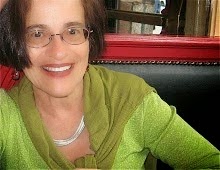
Eight charming adults and three adorable kids, ages nine, six, and three (only two American-born in this crowd) gathered at my home for this truly American nonsectarian festival.

The lineup and menu:

Ashish: East Indian meat dish
Chiou family: Taiwanese fried rice and pineapple cakes
Dexin: Mainland Chinese vegetable dish
Ghimirey family: Bhutanese dumplings
Kate (Jianing): All-American apple pie
Sherry: American wine and cider
Tamar: Roasted fowl, cranberry dish

Brief discussions on the holiday's roots and reading President Obama's holiday message. Sharing from our traditions on the significance and expression of thankfulness, gratitude, and appreciation of gifts unearned. And then, the feast!

Happy THANKS GIVEN, or, giving thanks for what has already been given!

Watch the video (1:58 minutes).


Related posts

November 14, 2010

Happy 107, Alice Herz-Sommer: Oldest surviving Holocaust survivor

I have lived through many wars and have lost everything many times — including my husband, my mother and my beloved son. Yet, life is beautiful, and I have so much to learn and enjoy. I have no space nor time for pessimism and hate.
Alice Herz-Sommer

During World War II, Czech-born Jewish classical pianist Alice Herz-Sommer performed for her Nazi Germans captors in the Theresienstadt (English, Terezin) Jewish ghetto.

"As long as they wanted music, they couldn't put us in the gas chambers."

Watch Dancing Under the Gallows (12:10 minutes).

(Note: Keeping an open heart recalls Emmett Till's mother who, immediately following the racially motivated murder of her son, Emmett (1941-1955), in the Mississippi Delta, demanded that the U.S. federal authorities return her 14-year-old son's mutilated body to his hometown, Chicago, and placed in an open coffin on public view. The bereaved Mamie Till, who forced the nation to look at the horror of racism, years later said: "'I have not spent one minute hating.'')

November 09, 2010

Kristallnacht, or "Night of Broken Glass"

 German bystanders view smashed windows
Kristallnacht, November 9–10, 1938

It is the 73rd anniversary of the Night of Broken Glass, or Kristallnacht.

On November 9–10, 1938, the Nazis launched in Germany vicious pogroms — state sanctioned, organized anti-Jewish persecution and riots.

The Nazis plundered and destroyed synagogues and Jewish-owned stores, community centers, and homes. The shattered windows carpeting the grounds inspired the German word Kristallnacht to identify those pogroms. (German: Kristall, crystal, which refers to the appearance of the broken glass; and Nacht, night).

Poet, professor, and diarist Karen Alkalay-Gut's parents caught the last bus out of Danzig (now Gdansk, Poland) the night Hitler invaded Poland on August 31, 1939. She dedicates Night Travel to them.

Night Travel
for my parents

On that night in Danzig the trains did not run
You sat in the bus station till almost dawn
knowing that if you could not get out,
the invaders would find you, grind you among the first
under their heels.

Toward morning an announcement came of a bus,
and without knowing where it would go
you raced to the stop.
But the Nazis were there first, and you watched
as they finished their search -
checking each traveler for papers,
jewelry, a Jewish nose.

Among the passengers you recognized
a familiar face - a German woman - sitting
with someone else you'd seen
in the neighborhood.
They winked a greeting,
waited for the soldiers to leave,
and jumped out -
pushing you up in their place.

Thus you escaped to Berlin, remaining alive
by keeping silent through the long train ride
from Berlin to Cologne in a car filled with
staring German soldiers -

And arrived the next day in Holland,
black with fear and transportation.

— from Ignorant Armies by Karen Alkalay-Gut
Merrick, N.Y: Cross-Cultural Communications, 1994

November 03, 2010

I voted in Georgia's 5th district, DeKalb County

I don't like the election outcomes, locally or nationally. And, I don't like the signage (on the left, especially) on the front door of the public elementary school where I cast my electronic ballot yesterday. Yet I am quibbling. Or perhaps I'm not. Could there be a link between the poorly worded, confusing and misleading instructions on the sign and much of the toxic campaigning rhetoric?

It's an ideal time, therefore, to turn to communications in which words mean something. So I listen to W.S. Merwin, the United States Poet Laureate, in a conversation with LIVE from the NYPL [New York Public Library] director, Paul Holdengraber. And I read some of Merwin's poetry and the Psalms.

And, then I remember Psalm 30:6 —
בָּעֶרֶב, יָלִין בֶּכִי; וְלַבֹּקֶר רִנָּה | At evening, one beds down weeping, / and in the morning, glad song.

Which helps me to focus on the wondrous re-election of a giant of the American Civil Rights Movement — Member of the U.S. House of Representatives from Georgia's 5th district, John Lewis. Lewis, throughout his college years, was beaten bloody by white mobs and imprisoned in struggles to end segregation. He was a staunch early opponent of the Iraq War, and, last year, was arrested outside the Sudan embassy during a protest against genocide in Darfur. It is a good day, after all.