June 19, 2008

On the Face: Lisa's very cool interview with Stephanie

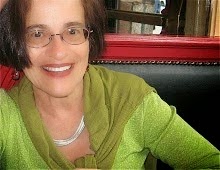
My photo with Stephanie — treasured friend and colleague since 1994 when we met, in Atlanta, at A.D.A.M. Software, Inc. (now, A.D.A.M., Inc.) interactive anatomy and multimedia products. And, since 2006, when her persistence trumped my excuses, my blog mother.

"Your blog's name is well chosen," Jeff commented on an earlier post. "Connecting with people, reaching out to them... that's a good thing. You're one of the people who lowers the degrees of separation."

Which partially explains how Stephanie, who blogs at Cool People I Know, "met" and interviewed uber blogger Lisa last week on my MacBook, with a little coordination and much magic.

My photo with Lisa — whose depictions of life in Tel Aviv and in neighboring areas (Palestinian territories and Lebanon, among others) induced me to email her last year ("Can we meet?"), turning a virtual friendship into the real kind.

Lisa's authentic approach to reporting on life that no mere visitor (whether reporter, politico, or tourist) could possibly know, and her friendships with Lebanese bloggers and on-the-ground coverage during the Second Lebanon War, drew attentions of CNN, BBC, and The Washington Post, among others — and a burgeoning global audience.

Lisa (in my Tel Aviv flat) told Stephanie (on a cattle farm in Georgia) why she started her On the Face blog (and how she chose the name). Responding to astute questions, Lisa shared some of the art of crafting blog posts while maintaining a collegial community with up to hundreds of daily visitors and commenters from diverse, often opposing perspectives and bitter feuds across political, faith, and geographical boundaries.

Stephanie captured the fast paced, upbeat, low-touch, high-tech interview in this 30-minute podcast: Uncovering Tel Aviv: An Interview with Journalist/Blogger Lisa Goldman.

Locally. Globally. Only connect.

June 09, 2008

(Israeli) boy and his (friend's) dog on Shavuot

Or (in Hebrew, "visible light, source of illumination")
cuddles Sheer-li (in Hebrew, "my song")


To celebrate the revelation at Sinai and the giving of the Torah, my lovely friend Eilat invited several friends, including lucky me, to her home in Tel Aviv last night.

We dined on elegant dairy-infused culinary creations (none mine — the sole health-conscious, low-salt-and-fat, taste-free contribution).

In following the customary exception to the talmudic rule, that "holiday joy requires meat and wine," the table was a riot of cheese blintzes, yogurt with honey, cheesecake, lasagna — even a box of honey-laced, milky-white Toblerone chocolates!

Why eat dairy products on Shavuot?
Delicious reasons and sacred texts inform. Among them, Song of Songs (4:11) hints that the Torah nourishes "... like honey and milk under your tongue."

Children as guarantors
Before God gave the Torah to the Jewish people, the tradition teaches that God required agents who would assure the Torah’s continuity and transmission over the ages.

So the people suggested the patriarchs and the prophets, among others; to no avail. Only when they offered children as the guarantors, did the Jewish people receive the Torah.

Every Shavuot, I feel especially nourished by children's sweet optimism and earnest dedication — ideal qualities to guarantee the Torah's eternal life.

While native Israeli Or's attentions to his host's dog (shown in the photos) touched me deeply, I began to imagine him pleading (unsuccessfully) with his Moroccan-born mother and Russian-born father for such a pet. I projected, "Seems you want your own dog, yes?"

Relieved by Or's quick, "I have one!" I reflected on the blessings that beloved pets bring. Among them, loving (at least treating respectfully) others' pets, ultimately protecting all creation.

Shavout: celebrating revelation at Sinai and giving the Torah.

Children: guarantying the Torah — "tree of life" (Proverbs 3:18).

Chag sameach. Happy holiday.

May 26, 2008

Memorial Day Video: A Soldier Remembers

This video Op-Ed (4:31 minutes) features a veteran of the Iraq war who finds new meaning in Memorial Day.

Update | For my Memorial Day 2009 post, Do we find the cost of freedom/Buried in the ground? I borrowed the title from the Crosby, Stills & Nash song by Steven Stills that I first heard in the early 1970s during the Vietnam War. I included the lyrics of the group's classic antiwar anthem and a link to a video (4:32 minutes) of their singing it, with a collage of original photos by a photographer who writes, "one day we will get to the place where there is no more war... of this I am certain."

May 11, 2008

A Mother's Day blog series

When Ronni Bennett launched a Mother’s Day series at The Elder Storytelling Place, an adjunct to her blog, Time Goes By, she posted a new story each day, and today, Mother's Day, she has posted mine!

You can read my story, Happy birthday mother. Where are you? and from there link to the other six in the series.

As I approach my two-year blogging anniversary, I look to this story as the one that most reveals who I am. I have struggled with concerns, probably all excuses, about writing anything private or personal in my blog. Well, not too private or too personal. Yet those concerns vanished as I wrote about my mother, now in her ninth decade.

My mother's astonishing life has been marked by prodigious talents, extraordinary adventures, and exceptional accomplishments. Yet devastating tragedies and losses tripped her soul on her long, long journey to today.

Years ago, while she was fully present in spirit, she told me that she felt like an ancient tortoise.

Happy Mother's Day, mother, and to the many women and men who have mothered me along the way.

Update | May 14, 2010
This year, when Margalit Bernstein...  Brill... Chipkin... Balin would have turned 99, it is instead the day of her funeral. Today, at the funeral, my oldest childhood friend and another dear friend since high school are reading this story, which has become my eulogy for my mother: Happy Birthday, eema. Where are you?

May 08, 2008

Donating Israeli flags to honor elders, country, and faith

For months, Yehudit and her husband, Yisrael, owners of the Weizman-Liman Flag Store and small factory on Tel Aviv’s Brenner Street, have been working nonstop (except during Shabbat, Passover, and the brit milah [Hebrew: covenant of circumcision] of their first great-grandchild). They have been producing flags to fill orders during the seasonal heightened demand in Israel marking Holocaust Remembrance Day, Memorial Day, and Independence Day.

The couple loves their country of 7 million people, and exudes a sense of good fortune and privilege to be part of the historic process of the rebirth of the state of Israel in its ancient homeland, the land of Israel.

Last Friday, amid steadily mounting pressures to meet customers' deadlines, Yehudit called me about a commitment I had made to her last month.

Tamar, when are you coming to pick up the flags you promised to bring to the Beit Avot [Home for the Aged] where you volunteer? I want each resident to have a flag and for the Home to have flags everywhere on Yom Haatzmaut [Independence Day].

Not a little ashamed that I forgot and grateful to call such a woman, friend, I hurried to pick up the bundle of gifts.

At the Beit Avot on nearby Yavne Street, I pressed it into Ada's hands. As this director of programs and services gasped and shouted out, we laughed and wept, her expression (captured in the photo) saying everything.

Question: How do I know such righteous people?

Answer: By hanging out with their emissaries.

Yedidia, an Atlanta Torah MiTzion program havruta [Aramaic, study partner], instructed me to visit his maternal grandparents when I returned to Tel Aviv.

Just go to Allenby Street and slightly past the Carmel Market on your right, turn left onto Brenner Street. I forgot the number but go to the first or second building on the right and look for Weizman-Liman Flag Store on the mailbox. Up one flight, and you are there.

Weizman-Liman Flags
Brenner 2 (corner of Allenby)
Tel Aviv, Israel
Tel. 03/528-5385

My related posts
Israeli-made Bhutanese flags for Bhutanese refugees

May 07, 2008

Israel's Independence Day: From grief to celebration

From Holocaust Day to Memorial Day one week later is not a happy time around here, and the sadness is intensified by the mess our leaders are in.  — Karen Alkalay-Gut, Tel Aviv Diary 

During these days approaching Israel's birthday —
  • I broke my silent reflection on Holocaust Martyrs' and Heros' Remembrance Day, and accepted Stephanie’s sensitive, thoughtful invitation to join her, in Atlanta, in a Skype-recorded conversation with me, now in Israel. My hope is that listeners would reflect on the gruesome realities of the past that threaten everyone, everywhere, always, and resolve to act in ways to help prevent genocide of any people.
  • I remember my cousin Noam Yaakov Mayerson on this Memorial Day for Israel's fallen soldiers and victims of terror. His parents will be arriving soon at the Mount Herzl military cemetery, joining other families and friends at the graves of their loved ones. On August 7, 2006, Noam was killed when Hezbollah terrorists opened fire on an Israel Defense Forces unit in the southern Lebanese town of Bint Jbeil.
  • will join Shimon in one of hundreds of ceremonies nationwide this evening when Israeli flags will be raised from their half-mast positions marking the transition from grief of Memorial Day to celebration of Independence. After sunset, the start of a new day, we are commemorating sixty years since the birth of the modern State of Israel in its ancient homeland, the land of Israel.
Tonight, we celebrate what is easy to overlook, scorn, and despise in this dazzling country bursting with the bitter and the sweet.

Happy birthday, Israel. And endless more. Never ending. Everlasting. For eternity.

!יום עצמאות שמח

May 02, 2008

Holocaust Remembrance Day and Vivi's elementary school project

Dear Tamar -- Hi! How are you? Is Tel Aviv nice? In school, we are doing a historical fiction novel. I'm doing mine in WWII. It's about a girl and her family who take in a Jewish family. I would like to use your name as the mother in the Jewish family. If that is okay, please say yes. I can't wait for your response. See you soon. Love, Vivi


Dear Author Vivi!
— I love you, and I love your letter and question. I am THRILLED to be the mother in the Jewish family. I hope "we" are taken into a family as loving as yours. Did I ever tell you that a Catholic convent in Turin, Italy, took in my mother's Italian cousins Miriam and Aviva during World War II? As Jews, their lives were in mortal danger especially during that period. Both girls were almost swayed into the Catholic faith because they were at an age (around yours) when fitting in is s-o-o-o-o important. After the war, they came out of hiding and were returned to their parents. They slowly adjusted to who they were before the war (not that you can ever undo life experiences and be who you once were). In their later years, they both moved to Israel. Oh, I am doing great and Tel Aviv is a really fabulous place. Kisses, Tamar


Dear Tamar -- Thanks so much for being in my book. It's really cool that your relations were taken in by a Catholic convent. But it must have been sort of awkward. And speaking of awkward, I forgot to tell you some big news: Kramers is dead. It's very sad, isn't it? I don't know how he died, but he was at least 14. That's pretty old, for a cat. Anyway, we can't wait until you get back. Love, Vivi


NOTE: Ten-year-old Vivienne is a honors student at a public elementary school for high achievers in Atlanta, Georgia. We have been friends about ten years. Vivi plays piano and flute, is an active Girl Scout, studies ballet, and has performed in the Cherub Choir and Junior Choir at Trinity Presbyterian Church. An adoring younger sister to Caroline, Vivi appears regularly on this blog. Previous posts include —

April 29, 2008

Why I blog

On my blog reading rounds this morning, I came across an interesting musing here, on Mining Nuggets. Tamar (yes, there is at least one other blogging Tamar) writes, "Once again, I question why I blog." She then explores myriad possible answers, and concludes not with an answer but with a question: "... should I just ... well ... kick the habit?"

In reply to her intriguing question, why blog? I simply opened a vein, and out flowed this comment, almost verbatim.
I blog to process my busy life and mind. With all that draws me to explore, challenge, change, consider, and do, I look forward to the discipline of sorting through the myriad inputs and my responses and to make sense of the mix. In identifying the parts and arranging them in a coherent order or design, I can put the experience into a usable, even more interesting shape. For me and for anyone else.

And I love the connections that happen through my blog. Meeting fellow bloggers or commenters offers me amazing company — classmates, colleagues, rich content — here, in my school without walls in a universe-ity of infinite links. I don't like walls, and schools are not buildings where someone else decides what's good for me to learn, and when.

So, why do you blog? Or, why not?

April 17, 2008

The orange on the Passover seder plate


Professor Susannah Heschel, a leading Jewish feminist scholar, explains the origin of this modern custom. Her father, the late Rabbi Abraham Joshua Heschel, was a prominent scholar of Jewish ethics and a civil rights leader who participated with Rev. Dr. Martin Luther King Jr. and others in the Selma Civil Rights March (1965).

“In the early 1980s, the Hillel Foundation invited me to speak on a panel at Oberlin College. While on campus, I came across a Haggada that had been written by some Oberlin students to express feminist concerns. One ritual they devised was placing a crust of bread on the Seder plate, as a sign of solidarity with Jewish lesbians (there's as much room for a lesbian in Judaism as there is for a crust of bread on the Seder plate).

“At the next Passover, I placed an orange on our family's Seder plate. During the first part of the Seder, I asked everyone to take a segment of the orange, make the blessing over fruit, and eat it as a gesture of solidarity with Jewish lesbians and gay men, and others who are marginalized within the Jewish community (I mentioned widows in particular).

“Bread on the Seder plate brings an end to Pesach — it renders everything chometz [leavened bread]. And it suggests that being lesbian is being transgressive, violating Judaism. I felt that an orange was suggestive of something else: the fruitfulness for all Jews when lesbians and gay men are contributing and active members of Jewish life. In addition, each orange segment had a few seeds that had to be spit out — a gesture of spitting out, repudiating the homophobia of Judaism.”

Source: Miriam's Cup

Update | April 1, 2012  Visit my related post, In Tel Aviv: The orange on the Passover seder plate, which describes the Joint Passover Seder for Israelis and African Refugees and Asylum Seekers in Israel that I attended. There, “see” oranges on dozens of seder plates, “meet” some participants, and “listen” to excerpts from their Exodus stories, gripping all.

April 09, 2008

In Israel: sirens wail nationwide

Woman with Dead Child (1903) by Kathe Kollwitz,
National Gallery of Art, Washington, DC

(in the public domain in the USA)

Every war already carries within it the war that will answer it.
— Kathe Kollwitz (1867-1945), Artist and Social Activist

This morning, in the largest civil defense drill in Israel's history, an air-raid siren sounded a loud dull wail at 10 a.m. nationwide (except in Sderot, Ashkelon, and other communities along the Gaza border). five-day exercise was launched Sunday in the face of increased tensions with Syria, Iran's efforts to obtain a nuclear weapon, and possible chemical and biological attacks. Charming possibilities. 

Scenarios and simulations were enacted — among them, children carried "wounded" classmates to bomb shelters and emergency personnel rescued "injured" trapped in rubble. The public was asked to use the practice to locate the closest bomb shelter or protected room.

While Israel authorities insist the drill does
not mean that war is anticipated in the near future, hearing the siren's wail immediately brought a flow of tears and associations of pain, horror, fear, memories, anxieties. First to my mind leaped images of Noam Mayerson, my cousin — killed in the Second Lebanon War, in 2006. Next, I thought about my relatives (whom I never met) in Europe before, during, and after the reigns of terror of World War II.

Now,
my dear friend Shimon and his family in Ashkelon and fellow civilians in Sderot flash into focus. There, in Israel's southern region, within fifteen seconds of real warning sirens, real rockets land. Fifteen seconds to absorb the information, manage the terror, and seek and then find and enter a safe place.

While politicians and talking heads with jobs and leisure and 
without accountability pontificate and analyze other people’s experiences, these terse lines capture my attention:

What comes first, peace or security? Ostensibly this is the crux of the debate between the two and is like the question: whom do you love more, Mom or Dad? Peace without security is a lie. Security without peace is nonsense.
— Akiva Eldar, The lie of peace and the nonsense of security, Haaretz

March 27, 2008

Sherry's baby pictures, a portrait of Jim Crow segregation laws

Recently, Sherry and I chatted on Skype (she in Atlanta; I, in Tel Aviv). Our signature unstructured exchanges moving from personal stories to more public ones, took a sudden and dramatic shift back to the personal. “Did I tell you about Corey’s conversation with my mother?” she blurted out.

And out poured another scary true tale of the upshot of Jim Crow, underscoring the perfect pitch of Senator Barack Obama’s
recent 37-minute speech heard around the world. "But race is an issue that I believe this nation cannot afford to ignore right now," he intoned, calling all the people of the U.S. to face it head on.

Tell your truth, Sherry,” I coaxed, write about Corey’s conversation with your mother, and use my blog as your virtual StoryCorps project booth.
” And she did just that.

° ° °


Baby Pictures
by Sherry as told to me
Hattie Pearl and daughters Sherry (L) and Marsha (R)
I was born 56 years ago, and grew up in suburban Atlanta, Georgia. I am all too familiar with racism and the humiliation of segregation. However, I was amazed by a call I got from my sister Marsha.

Marsha
told me about her son Corey's conversation with our mother. It was about the baby pictures (long a sensitive subject for my siblings and one that our mother, Hattie Pearl, kept silent about for years). Last month my twenty-something nephew asked her why there were no baby pictures of his mother.

Though we have baby pictures of me, the eldest, we have none of my four siblings. And until
Corey's direct questioning, they remained puzzled and asked about it, but my mother didn’t really answer.

My mother’s answer was simple yet amazing. She calmly explained that when I was born, in 1952, photography studios where we lived would not photograph black people. So, my parents drove to Auburn Avenue in downtown Atlanta and had my pictures taken in this black business and residential area. When the family grew rapidly, my parents were simply too busy to make the trek for my siblings’ pictures. “Why didn’t you ever tell us?” I asked her. She just shrugged.

No eating here; no sitting there
My mother hated taking us for ice cream, she later told us, because while black people could buy at an ice cream shop, they were forbidden from eating there. We kids would pepper her with questions all the way home about why we couldn’t eat at the shop. Much later I realized that she could not bring herself to tell her babies that America considered us second-class citizens.

While my mother continued to try to protect us, the horrible truth was encroaching steadily. One day it hit me with a force that still shocks me today.

Many Saturdays, she would drop us off at the Strand Movie Theatre, where we entered through the back door. When I asked why we went this way, she said it was cheaper, and I accepted her explanation.

I don’t remember
my mother telling us to sit upstairs in the balcony; probably, we intuitively joined the other black people. One day, all the balcony seats were filled. So I, age seven or eight, blithely went down the stairs, found an empty seat, and sat down.

Suddenly, a white man, shining a flashlight in my face, screamed “Nigger, get back in that balcony!” Terrified and sobbing, I ran upstairs, sat on the steps, and continued to cry. The other black kids laughed hysterically, incredulous that I didn’t know my place. While I still
hear the violent screams and the laughter, I remember nothing about the movie.

Vacation Bible School fiasco
For some reason, a few white women came to teach Bible School at our church. All week, we had done arts and crafts, which I loved, and Friday, we would take our projects home. One night that week, the Klan burned a cross at our church. The teachers couldn’t return, and I never got my project. I felt devastated, confused, and afraid.

Traumas of integration
These sample ordeals should have prepared me for the coming trauma. But they didn’t. In 1965, I was among the first small group of black children to integrate the high school under the Freedom of Choice plan. One night, a few days before starting school, a cross was burned in front of our house.  So the night before our first day, my dad
sat up all night long with a shotgun.

Everyone — students, teachers, administrators, and even bus drivers threatened, harassed, and humiliated us nonstop. After a year of this treatment, I finally got it. At the tender age of 13, I had an epiphany: They really do hate us and want to kill us! Until that moment, I had been clinging to the belief that this couldn’t possibly be true.

When I became the first black person to be admitted to the Beta honors club, I was ready. I stood stoically in the line of inductees and heard students in the audience scream at the adults, “You must have made a mistake, there’s no such thing as a smart nigger!”

During the horrible integration days, my normally shy mother’s behavior was astonishing. She protected us vigorously and even threatened the principal that she would take him to the U.S. Supreme Court if he forced black children to sit together on the bus (this way, accommodating white kids’ demands to sit apart from us).

So, I suggested to my black classmates that we spread out and take a seat in all parts of the bus. In response, the driver told us to sit together (to create a separate block of seats for the white kids). When my mother confronted the principal with our reports, we were permitted to sit anywhere. Yet the white kids defied the order and stood rather than sit next to us.

My mother had such strength. During the early days of integration, we commuted many miles to the black elementary school as we rode past the white school, packed like pigs in a raggedy school bus. Until the day my mother went to the
black school and counted us as we got off the bus. There were 101 of us.

She enlisted the principal to join her in forcing the local board of education to give us another bus. When the board claimed it had no extra driver, an excuse for not getting the other bus, my mother found a driver.

Understanding and gratitude
For a long time, I was so angry with my mother for not telling me the truth before the theatre incident and about the other horrors sooner. Eventually, thank God, I came to understand her dilemmas and I imagined how she must have struggled during those years (and, of course, throughout her whole life).

I mean, really, how do you explain something like racism to a child? Now, I am grateful for those few sheltered years under the protection and sometimes cover-ups of my beleaguered parents.


Related post
Listening to StoryCorps’ Dave Isay and Atlantans tell their stories


Update | A month after publishing 
Sherry’s Baby Pictures, The Elder Storytelling Place weblog of Time Goes By cross-posted it with our permission, triggering a range of comments there, too.

March 19, 2008

Purim: celebrating solidarity and mutual responsibility


With Purim-masked barista at Cafe Metuka
(close to the Tel Aviv Cinemateque Library)

It is Purim eve here in Tel Aviv (and everywhere outside Jerusalem and all ancient walled cities). Celebrants have already begun planning, creating, and posing in holiday costumes!

A key focus is on bringing joy to needy people as we observe these four mitzvot, commandments:
Yesterday, at the Beit Avot on Yavne Street — where you'll find me Wednesdays (listening, yakking, and hugging) among the elderly infirm, Gisela beamed, "Tomorrow, the rabbi and his wife are coming. We will hear the Megillah read and there will be gifts for everyone."

A feast for the have-nots, too
Purim’s gifts to the needy are to provide more than mere sustenance.
The commandment of giving gifts to the poor on Purim teaches us that happiness is not the exclusive province of the rich. If it is, the celebrations should be canceled....

... Not surprisingly, Maimonides succinctly expresses this fact in his statement that 'gifts for the poor deserve more attention than the festive meal and gifts for friends because there is no greater, richer happiness than bringing joy to the hearts of needy people, orphans, widows and proselytes' (Mishneh Torah, laws governing Purim, Chapter 3, section 17). [Haaretz newspaper, March 4, 2007 | Adar 14, 5767]

How much to give to the needy on Purim?

I always respond that 'one should reduce what one spends on Mishloach Manot and give more to needy Jews.' — Rabbi Michael Broyde

The Megillah tells that when Queen Vashti refused to dance naked and entertain her husband and his friends, he had her beheaded. Today, many women still suffer physically and emotionally in abusive relationships. Jewish Women International has a comprehensive site devoted to this issue and resources.

"Megillat Esther…reminds us that history is capricious and life is fragile; that willing or not, we must confront our powerlessness and vulnerability, our inability to control everything. Or anything." — Rabbi Sharon Brous

Have a happy Purim!

March 09, 2008

Smiling at random, from Atlanta to Jerusalem with the Smile Project

Resting on a large boulder on Atlanta's Clifton Road, between the U.S. Centers for Disease Control and Prevention (CDC) and the fire station, and across from Children's Healthcare of Atlanta and the Rollins School of Public Health of Emory University, I spied it.

An illogical generosity of spirit. The bright painting of a colorful, happy, whimsical creature. And, taped to its lower edge, a note bearing the message:


The proposition intrigued me. I loved the painting, the message, and the random way in which I had come upon it. (I could have taken the bus instead of walking that Sunday morning to Emory’s Cannon Chapel ecumenical, open worship to hear Bishop Bevel Jones preach the sermon on The Ministers' Manifesto. Or, my passing the boulder could have been too late. Or too early.)

Yet I was suspicious. Who gives away such loveliness? And merely for the price of a promise to smile at random people more often?

More self-tormenting questions: Who would check my faithfulness to hold up my side of the bargain? Shouldn't the find go to someone else... more deserving... a child? Yet I wanted it. How could I reconcile my doubts and take up the offer?

Within seconds, I had formulated my plan. I glanced around hoping no one was watching. And then I took it.

The painting and the note would travel with me the following week to Israel, in what has become my semiannual rite of passage, from Atlanta to Tel Aviv (and then back).

Once in Israel, I would deliver the package to my Jerusalem cousins (shown in this and the next photo). And I would task the Zohar family, including Daniel, Ohad, and Aviah (among the stars of this blog) with the proposition.

Checking the web address on the note provided clues to the art and ways of Bren Bataclan. Born in the Philippines and educated at top U.S. institutions, in 2003 Bren began The Smile Boston Project, his street art project to brighten spirits.

Eventually, the project grew and evolved several additional goals, including bringing art to people who typically don't go to art museums and galleries, giving paintings to people who may not be able to afford original artwork, creating murals in schools and hospitals, and everywhere spreading smiles.

Worldwide, Bataclan has left bright and vibrant paintings of his colorful characters on park benches, in subway stations, schoolyards, and other public places — such as the large boulder on Atlanta's Clifton Road. To each painting Bataclan attaches the same note.

Don't you want the project to smile on you, too?


Update | To find out who won the "Smile Project" 2009 feedback prize, meet me here!

March 03, 2008

Sleepless in Jerusalem: Qassam rockets hit Ashkelon

Late last Saturday night, I finally quit trying to reach Shimon on his cell phone. My havruta (Aramaic: study partner) of more than eight years had not answered my myriad calls after the Sabbath Havdala ceremony (denoting separation between sacred time and ordinary time). And, then I turned on the radio to hear the news.

Hours earlier, the reporter intoned, Hamas militants had fired from the Gaza Strip into Israel quassam rockets, including some longer-range katyushas that hit the large coastal city of Ashkelon, damaging houses and apartments. This is the first time that a quassam has ever reached Ashkelon in the western Negev, in the South District of Israel.

Here, in this ancient maritime area (site of one of the five cities of the Philistines) Shimon lives with his parents while writing his doctoral dissertation in psychology. The bible records that Samson, King Saul and his son Jonathan, and King David, among others, spent time here, too.

Fifteen seconds to find safety
As with all cities and towns that are designated Color Red — the code for an attack on civilian populations, warning sirens pierced the Sabbath quiet as Shimon, his family and entire community understood the dreaded message. Within fifteen seconds, a rocket would land close by. Fifteen seconds to absorb the information, to manage the terror, and to seek and then find and enter a safe place.

Only days earlier, I had introduced Shimon and Josh Gomes (both shown in the photo). (Josh, a grandson of my beloved Stella, of blessed memory, is a professional American basketball-player now helping to bring the local Binyamina team to victory.)

On learning of the katyusha rocket attack about fifty miles from my radio, inside my head images of Shimon danced to rippling sounds of his voice, his laugh — broadcasting his signature wit and wisdom. Shimon: a human anchor in sea of chaos, seeding humor and intelligence, goodness and compassion — in danger? Unthinkable. Untenable. Possible.

In her blog diary entry, March 1, 2008, Karen Alkalay-Gut muses
Thank goodness we only paper-trained our dog. Even though she goes out four times a day she still pees on the paper at home. And there is much to piss on today. What terrible developments. Katyushas on Ashkelon. Kassams on Sderot. Attacks on Gaza. Human lives targeted. And of course both sides become more and more determined. We of course would stop as soon as the rockets cease.

Life may go on amid this madness, but sometimes I can't get my head around it. So I almost didn't go to my good friend's birthday party, but I did, and I forgot everything in the celebration - until the final song of the sing along - Shalom-Salaam. Then suddenly the absence of the very thing we were singing about returned to me with such pain. How many people were killed since we began the party? How many people irretrievably traumatized? How do we get around this?

Early the next morning, my phone rang. As I grabbed it, spotting Shimon’s name and number in the caller ID window, relief engulfed me.

Cut-to-the-chase Q&A
Me: Are you OK? How are your parents? You must have a long list of calls to return so I won’t keep you.

He: Yes, I’m OK. My parents are in denial. I accidentally left my phone in the car last night, and it was too late to return messages when I discovered it. Yes, I have lots of calls to return.

Our staccato exchange ended, I burst into smiles as I temporarily blocked out thoughts of lingering terror and the immediate tragedy for others in Ashkelon (and elsewhere), unlucky this time.

February 26, 2008

Bridging two worlds: How-To


Sitting next to me on the bus back to Tel Aviv from Jerusalem was the gentle elder whom I met in the line to board Bus 480 in the Jerusalem Central Bus Station.

While most people pushed to mount the steep steps of the bus first, a small woman, clutching a large bulging bag in each fist, waited her turn patiently. When I bowed to indicate that she enter before me, she insisted, “You got here first, I saw you.” And I knew exactly next to whom I would plant my self, jacket, Brookstone backpack, and stuff-filled Whole Foods eco-friendly bag.

An old message: Jews, get out of Iraq
In the habit of strangers who meet on a journey, we bonded quickly, and I learned that my companion had arrived in Israel as a refuge child from her native Iraq. “They drove out the Jews, and we left in haste.” And, we segued into exchanging the outlines of our lives during the 45-minute road trip.

As our bus neared the Tel Aviv Bus Station, police blockades along the major arteries were causing delay, confusion, irritation, and rumor-mongering among the passengers. Everyone's dreaded unasked question: Were the blockades on account of a “suspicious object” (a possible terrorist bomb planted in an abandoned container found nearby)?

Within minutes, in a scene reminiscent of Jean-Luc Godard's opening frames of Week End, spaghetti-like streams of stalled vehicles, their passengers-turned-pedestrians took to the highway. Here, helicopters droned overhead along the barricades where protesters, holding placards — UNDER FIRE IN SDEROT, chanted, “We want a military solution! We want the army to do what's right and to fight the enemy!"

An old message: Jews, get out of Israel
Sderot is the southern Israeli town where, during the past seven years more than 8,000 qassam rocket attacks from the Gaza Strip have been pouring on schools, homes, streets — everywhere. Here, where 33% of the children suffer from PTSD (post traumatic stress disorder), civilians and even schoolchildren act as medics, attending to injured family, friends, pets, animals — anyone.

The protesters came from Sderot to Tel Aviv to demand that the Israeli army kill, besides the terrorists who are missile launchers, Gaza's political leaders who meet every Saturday afternoon to decide where and when to terrorize Jews, then order the missile launchers to fire and to kill.

Bridging hemispheres, cultures, eons: tips —
  • Choose, if possible, a bus seat companion who is gentle and thoughtful.
  • Pay attention that Iraq/Babylonia drove out its Jews, who had been living there more than 2,500 years since their earliest expulsions from their native Land of Israel.
  • Pay attention that Iraq’s cousins in Gaza and elsewhere are doing their best to drive out the Jews from the State of Israel.
  • Therefore, choose life! !וּבָחַרְתָּ, בַּחַיִּים
I call heaven and earth to witness against you this day, that I have set before you life and death, the blessing and the curse; therefore choose life, that you might live, you and your seed. (Deuteronomy 30:19)

הַעִדֹתִי בָכֶם הַיּוֹם, אֶת-הַשָּׁמַיִם וְאֶת-הָאָרֶץ הַחַיִּים וְהַמָּוֶת נָתַתִּי לְפָנֶיךָ, הַבְּרָכָה וְהַקְּלָלָה; וּבָחַרְתָּ, בַּחַיִּים לְמַעַן תִּחְיֶה, אַתָּה וְזַרְעֶךָ — דברים ל:יט.

February 01, 2008

Bishop Bevel Jones and The Ministers' Manifesto

My previous post on Dr. King's birthday continues here.

With Bishop L. Bevel Jones,
coauthor of “The Ministers' Manifesto”

As a child growing up in New York City, I watched images on TV that were forever etched in my young soul — police and their dogs attacking small children. In resistance to the 1954 Supreme Court decision in favor of integration, mobs of men, women, and children waged obscene deadly battles in Little Rock, Arkansas. In one of the ugliest chapters in the nation's history, citizens and state leaders — elected officials, clergy, school personnel, police, and firefighters partially shut down Central High School.

The uproar pervaded the deep south. Georgia deliberated closing its public schools rather than allow black and white children to attend them together. Here, fewer than 100 principled, courageous ministers of the all-white Atlanta Christian Council took a bold stand where church leadership (really, any leadership) was desperately needed.

“Where there are no men, strive to be one ” (Rabbi Hillel)
Then age 30, retired United Methodist Bishop L. Bevel Jones III and fourteen other clergy drafted an appeal for moderation, communication between the races, racial amity, and obedience to the law. Eighty clergy signed it, and on November 3, 1957, the Atlanta Journal-Constitution published on its front page what became called The Ministers' Manifesto. It was credited with helping Atlanta desegregate peacefully by discouraging city officials and Atlanta citizens from pursuing a course of massive resistance to federal authority.

Rabbi Jacob M. Rothschild, whose moral convictions and bold actions — like those of his Christian colleagues, evoked the ancient biblical prophets did not sign this historic statement by Christians. Still, the Ku Klux Klan (KKK) responded to his partnership with them and related activities by bombing the Temple, the city’s oldest Jewish congregation. The bombing aroused new fears of racial extremism, prompting more than 300 ministers to issue a second manifesto calling for the creation of a citizens' commission to debate alternatives to massive resistance.

The promise of this nation's founders
Last Sunday, Bishop Jones preached the sermon at Emory University’s Cannon Chapel ecumenical, open worship. Susan Henry-Crowe, Dean of the Chapel and Religious Life, welcomed the group that included Emory organizations — from Jewish to Muslim and from Catholic to Protestant. The Bishop's sermon was part civil rights history, part autobiography, and part personal principles and beliefs. He said:

Nothing is quite as uninteresting as a religious moralist, always on the side of angels but never fighting any devil. We must be willing to take sides on moral issues of the moment. And our ideas must be linked to actions that address specifics, tangibles. — Bishop Bevel Jones

And, Bishop Jones remembered —
  • Rev. Dr. Martin Luther King, Jr., who called us to address the monster triplets — racism, economic injustice, and militarism, and insisted that the nation be a beacon of light, not a bastion of might.
Bishop Jones closed the morning service with a benediction that spoke to me as I prepare to cross “the pond” to resume my life on the other side, in Israel.

As you go, may God go with you —
Before you, to guide you,
Behind you, to guard you,
Beneath you, to uphold you,
Before you, to inspire you,
Beside you, to befriend you, and
Within you, to give you peace.

January 21, 2008

On Dr. King's birthday, listening to "Why I Am Opposed to the War in Vietnam"


Forty-one years after Vietnam, in the midst of our current unjust war — the invasion and attempted occupation of Iraq, heed Dr. King's call —
Now, it should be incandescently clear that no one who has any concern for the integrity and life of America today can ignore the present war.

Dr. King delivered the sermon (full text here) at Ebenezer Baptist Church, Atlanta, Georgia, April 30, 1967. Black Forum records, a subsidiary of Motown, released this recording, which won a Grammy in 1970 for the Best Spoken Word Recording.

January 11, 2008

StoryCorps' Dave Isay and Atlantans tell their stories

Valerie Jackson interviews Dave Isay,
StoryCorps
founder and journalist

Sister-pal Sherry and I were among the throng that arrived an hour early to get a seat in Atlanta's Georgia-Pacific auditorium for a special live taping of the weekly author interview program, Between the Lines. In welcoming us, host and former First Lady of Atlanta, Valerie Jackson, instructed us to maintain strict silence and to save our questions for the Q&A after the show.

And then, the ace interviewer with the velvet voice introduced StoryCorps founder and journalist Dave Isay, who shared stories of love and healing from the largest oral history project in the nation’s history. Many of the stories are recorded in his latest book, Listening is an Act of Love: A Celebration of American Life from the StoryCorps Project.

Dave Isay on telling stories
  • Stories tell who we are. They are the poetry, grace, and wisdom of people walking down the street or sitting next to us on the bus.
  • People want to know that they matter and that they won’t be forgotten.
  • We all own family secrets, which can be destructive so we need to talk about what’s real and important and to put things out in the open.
  • Everybody can participate in telling stories (directly; not through politicians, journalists, academics, or others). Their stories might be about a first date remembered 25 years later, the Sunday school teacher who inspired a generation, a widowed father who raised healthy children amid profound loss, a hospital orderly who prays for patients, and families whose loved ones have Alzheimer’s disease.
To listen to the radio program, click here.

Update | March 27, 2008 In a virtual StoryCorps booth — this blog, Sherry told her story, Sherry's baby pictures: a portrait of Jim Crow segregation laws.

December 24, 2007

Bethlehem bound: Is it safe?

Janet, Brian, Caroline, and Vivienne Reed 

Janet, Brian, Caroline, and Vivienne Reed are in Manger Square, in the center of Bethlehem. Here, in the Church of the Nativity, in the Grotto where tradition says Jesus was born, they are celebrating the ancient birth narrative in lessons, carols, theatrical enactments, and liturgical services.

The Reeds rode an armored bus from the Anglican Church in Jerusalem to cross through the large Israel Defense Forces (IDF) checkpoint to Bethlehem, a short though security-conscious journey that they hesitated to make.

Their hesitation? In May 2002, Israeli-Palestinian fighting erupted when Islamist terrorists seized the Church of the Nativity, holding hostage dozens of Christian nuns, priests, monks, and pilgrims for weeks, and desecrating their holy site. For this and other reasons, many Western governments warned against nonessential travel to Bethlehem. Yet new peace talks among the fighting parties encouraged my friends to join today's flow of pilgrims, tourists, families, and clusters of friends.

Green light to Christmas Eve in Bethlehem
Aviah, my cousin who recently completed three years' service in the IDF elite Paratroopers Brigade, relayed this message to the Reeds when I called him to inquire on safety conditions:
. . . Tell your friends the Israeli army will protect them.

Lisa Goldman, freelance journalist/writer, resident of Tel Aviv, and uber blogger, replied to my email:
. . . Bethlehem is quiet and safe, and there will be plenty of people around. I'm sure they'll have a good time.

* * *
Closer to home, here in Atlanta, I joined Stephanie's family to watch the children, Bethlehem bound in spirit, retell the Nativity birth story (that Angela directed) in their church.

Seated behind these angels (waiting in their wings for the cue to perform) and basking in their sweetness and light, their wonder moved me to tears. Reflecting on the same wonder I have felt at their age and since, listening to and retelling my family’s millennia-long Jewish history, tradition, and lessons, I knew this:

We — the Reeds, Stephanie's and Angela's families, others', and mine all experience sacred time, and we all retell our sacred stories.

Today, I am sending love to my Christian friends worldwide, among them the Reeds, David and Hope, Faye and Jim, Josh, Madeline, Jonathan, Luther and Helen, Joe, James and Anissa, Danny, Marlene, Olga, Budd and family, Ellen, and virtual pals Nizo and Bronze. And, I am remembering my Christian loved ones, whose memories are a blessing: Stella, Jean, and Kathy.

Related posts

December 14, 2007

Remembering Aunt Ruth and Uncle Leo Friedson (and more)

On the eighth night of Hanukkah: first victory for freedom of worship, my cousins Gila and Chaim lit candles, sang holiday songs, and ate holiday foods in their Jerusalem home.
And then, with Gila's sister, Miriam, they began sorting through the sisters' late parents photo collection —  each image a frame in the human story.

Among the photos is the one Gila is holding in the photo that Chaim captured and sent to me. "Thought you might enjoy this shot," he noted in his email message. Chaim was right! The photo was a Hanukkah gift for the ages. Here is why.


Portrait of two sisters
In the photo, I am about nine or ten years old and my sister, 15 or 16. To prepare for the photo studio session, I got a haircut (probably at Best & Co.) and chose my outfit. When I saw the finished product, I protested the false colors of my dress: Washed-out rose pinks had replaced the original rich reds. And it bothered me that my sister’s dress was more grown-up than mine, its waist bound by a tie.

Until Chaim sent me the image, I had no idea that my parents had sent the photo to my Israeli Aunt Sarah and Uncle Matityahu, parents of my cousins Gila and Miriam who lived in Kiryat Motzkin, on the outskirts of Haifa.

I did know that my parents distributed copies of the photo to my maternal grandparents (who lived  less than a mile away from us, in Manhattan) and to my mother’s only sibling, Ruth, and her husband, Leo (who lived in Norwalk, Connecticut — an hour's train ride away). Aunt Ruth and Uncle Leo were childless, and winning their hearts was the upside of lacking American cousins.

Me: part brat, part trooper
I am not proud that I could practically wrap my pudgy finger around my Uncle Leo. And I am ashamed that I once hijacked my father into buying me a beautiful coach-style doll carriage, taunting, “Uncle Leo will buy it without requiring me to read Hebrew books.” My father caved and bought the carriage, which triggered my guilty feelings for being manipulative and rude. Though I dearly loved pushing those fancy wheels along West End Avenue and Riverside Drive.

Fortunately, I had a softer, sweeter side. When I turned 12, I got a parakeet, which I brought with me on occasional solo weekend visits to Aunt Ruth and Uncle Leo. The bird, traveling in a little carrying cage they had bought for these journeys, rode the train with me from New York’s 125th Street and Lenox Avenue station to South Norwalk. There, my aunt and uncle met us and drove the bird and I home, where their guest room offered a bed for me and a standard-size cage for the bird.

In appreciation
Aunt Ruth and Uncle Leo played central parts in my childhood. They took me to restaurants and the beach, and Sundays and holidays we rode in my uncle's grey DeSoto around their neighborhood — exotic haunts to a kid from Manhattan. In their grocery store (Friedson and Sons), I drank all the chocolate drinks I could swallow and munched on bags of Wise Potato Chips and I played with a steady supply of kittens my uncle kept to do a job I understood (thankfully) only years later.

My aunt, whose stock of Revlon nail polish included every shade of red, let me paint my stubby nails with abandon. Through my childhood years, she bought me red shoes, summer and fall outfits, and, in my early teens, taught me to knit — even supplying wonderful yarns and pattern books and the occasional “kit” to knit slippers and a scarf that cleverly doubled as a hood.

My aunt and uncle spoiled me rotten, which felt like sheer heaven. My happy memories with this childless aunt and uncle offset some of the pain of losing my father when I was 12, the same year my sister went off to college and then got married. And I am grateful, too late for them to know, for their care and affection.

So, when my Jerusalem cousins' discovered their copy of the photo of me and my sister, and then send me a photo of the photo, they triggered for me memories of special times and missing important people from a childhood and youth vanished yet never forgotten.

A Hanukkah gift for the ages.

November 19, 2007

HAPPY THANKSGIVEN

My gorgeous amazing Chilean-born friend and former neighbor in Atlanta is a five-year survivor of ovarian cancer. Today, at age 72, she updates me (from across town) in her signature Spanglish, which I adore —
I have been worry about my healt. My last test show somethink that could be serious, so I will have to get another one (Pet CT) in a few weeks more, until then I am not going to be sure if I have metastasis and probably a new treatment. I am very concern and nervous. I miss you, I love you. HAPPY THANKSGIVEN.

Curiously, my friend's misspelled valediction bears a profound message: THANKSGIVEN. Or, giving thanks for what has already been given.

Just days before this most glorious of American holiday traditions — giving thanks in a national, coordinated way across the ridiculous artificial divides we humans create, I celebrate my friend and her attitude of gratitude. And, I celebrate all life by giving thanks for all that has been given. (Celebrating this all business, admittedly, can be mighty challenging, often requiring a perspective informed by a few dozen millennia...).

So, what are you THANKSGIVEN for?

I am humbly thanksgiven for security guards... who save lives (while often sacrificing their own). Here's why.

On Thanksgiving Day, we fourteen celebrants around Janet's and Brian's table took turns sharing memories of Thanksgivings past. My memory was of last year, in Tel Aviv, where, days before Thanksgiving, our hostess rode the train (choo-choo, not subway) to a farm where she purchased a freshly killed turkey. She then boarded the train back to Tel Aviv, though not before security guards (not only at airports in Israel...) demanded to know, why the bird?

It is not beyond imagination that a twisted mind would seek to detonate a bomb-stuffed turkey, blowing up self, bird, train passengers, and more. A non-cheery thought, especially on Thanksgiving, though we guests found the security check report entertaining. Where death, really annihilation, is a constant threat, you develop a taste for gallows humor and find laughter value in turkeys questioned at the border between a railroad station and just steps before entering it.

November 11, 2007

My grandmother's amber pin. Snow in Vienna and Jerusalem. (Yes, the subjects connect.)

Wearing my grandmother's amber pin
while embracing fabulous cousin Anat
at her family home in Jerusalem's Pisgat Ze'ev neighborhood

In his recent email, Vienna-based world traveler Stefan wrote, "We are on the way to Denmark on Sunday," to which I replied, "I have a magnificent amber pin (photo attached) that my maternal grandfather gave my grandmother when they lived in Copenhagen."

On Nov 11, 2007, at 1:57 PM, Stefan Schaden wrote:
Great amber pin! :)) Go and see Copenhagen (if you did not)! Wonderful city, modern, progressive. I can easily imagine living there! So interesting your cosmopolitan family [SNIP].

First snow in Vienna this morning, by now everything is gone, but you have pics attached.

shavua tov!
stefan

Stefan (who guest-blogged an Urgent Message on Austria's "sick people") wrote, "interesting your cosmopolitan family!" Yet I consider him family, too. While bloodline is one way to be family, and marriage confers family status, we also have family of choice: the one we populate with people we claim and who claim us.

On Nov 11, 2007, at 5:39 PM, Tamar Orvell wrote:
After I visit you in Vienna (this year?) and when you move to Copenhagen, I will visit you there, too. Your snow report reminds me of snows we trudged through together in Jerusalem.

Jerusalem snows
Stefan and I trudged through Hulda Hanevi-ah Street
and others in Jerusalem's Musrara neighborhood

Snow formed down quilts
blanketing roofs, balconies, and wrought-iron work

In the central-heat-free stone residence, I wondered,
"What about Stefan's pate? Will it freeze?"