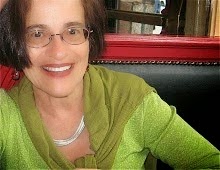
James has turned nearly four-years-old since I first published this post in 2008. This year, he and his parents will celebrate Christmas with baby Grace. While the world James knows will keep changing, some things will remain constant, among them sacred time and humans' search for meaning.
Watching 22-month-old James at his first Christmas concert, I got an inkling of what my Christian friends might hold so dear especially this season: A child well loved as an embodiment of wonder, innocence, sweetness, light, hope, trust, confidence, and faith.
Fully present, James listened intently to the oddly pleasurable sounds, probably making sense of their relation to the performers on the dais. Paying perfect attention with his whole body, the elfin concertgoer sometimes moved his arms and legs in response. During one uninterrupted minute, I captured him sitting upright, crayons clutched in both hands, transfixed by the magic.
Watch the video (1:15 minutes).
James ... Christmas Concert
My related posts
December 20, 2010

December 11, 2010
Green light to Christmas Eve in Bethlehem
 |
| Janet Reed: "Outside the Church of the Nativity with our backs to the wild party in Manger Square" |
We often experience sacred time by retelling sacred myths and stories. So when my friends the Reeds joined their friends (two families) on a ten-day trip from Atlanta to Israel last winter, Janet Reed's real-time diary of their interfaith journey brought me endless joy and fascination, which I chronicled in Bethlehem bound: Is it safe?
Their holy caravan of three families (six adults and seven children) traveled as one throughout Israel. In Jerusalem, the Reeds participated in their friends' children's Bar and Bat Mitzva ceremonies, and on Christmas Eve, the Reeds took a short security-conscious journey from Jerusalem to Bethlehem. So, when Dori called me from Illinois to find out how she and her fiance, Josh Gomes (a pro basketball player scoring points for Israel), might worship in Bethlehem this Christmas Eve, I knew which pro to ask.
Guest Blogger Janet Reed Writes
"Janet Reed is an FOT (friend of Tamar) whose family exploits are sometimes featured on this blog. Janet is a writer and the chief herder of two adorable girls and one fabulous husband who has introduced Janet to many of her best friends (such as Tamar!). Janet likes to read, cook, and travel, and especially enjoyed planning a trip to the Middle East last year, which included Christmas Eve in Bethlehem at the Church of the Nativity. The journey from Jerusalem to Bethlehem, the Church of the Nativity service we attended, and related experiences in Manger Square were spectacular in every way. You will have so much fun. We loved every minute of our trip.
"Here is an excerpt from an email we sent Tamar and others:
Greetings from Jerusalem!! We are having a GREAT time and are loving our trip. We made it to Bethlehem last night — a total zoo. A massive (NYC Times Square-ish) crowd in Manger Square, which we had to navigate with the girlies. Then pushed through the barrier into the Church of the Nativity through the labyrinth of that amazing church to a tiny Greek Orthodox chapel where we had Lessons and Carols (a cappella) with Mahmoud Abbas (super security detail included) and about 90 other "pilgrims," mostly English-speaking but lots of Arabs and Arabic speakers as well. Made it into the Grotto (where Jesus was born) for a quick touch, then back through the throng. Exhilarating and scary, but glad we did it.
About the Church of the Nativity
Three Christian denominations “share” the Church, and they hold services independently. (There are no restrictions on photography inside churches — so odd to us! — we took pix everywhere!)
Priorities
We wanted to get to Bethlehem and back in one evening, and to attend a service in the Church. As far as I could tell, the only group that could help us accomplish this easily was St. George’s Cathedral, Jerusalem.
About St. George's Cathedral
Nablus Road 20 Phone in Israel 02/627-2133; Fax 02/6276401. Outside Israel 972+2/627-2133. The Tickets are required, and only the Cathedral sells them.
From the Cathedral, we boarded buses that took us to and from Bethlehem — only seven miles away, twice crossing through a large Israel Defense Forces checkpoint.
2008 schedule
Key: (A) Arabic, (E) English
24 December
- 4 pm Carol Service in Shepherds Field (YMCA) of Beit Sahour (E, A)
- 7 pm Buses depart St. George's Cathedral for Bethlehem
- 9 pm Service of Christmas Carols and Lessons in the Church of the Nativity (E, A) Buses return to Jerusalem after the service.
- 11:30 pm Eucharist of the Nativity in St. George's Cathedral (A, E)
- 10 am Christmas Day Eucharist (A, E)
- 6 pm Solemn Evensong (E)
7.30 am St. Stephen's Day Eucharist (A, E)
Other travel options
You can go to Bethlehem for a wild Christmas Eve party in Manger Square (no kidding — that’s what it’s called!) and you can Google “Christmas Eve in Bethlehem” for schedules of various services and activities. If you want to visit Bethlehem any other time, that’s pretty easy. If you’re feeling highly adventurous, you can drive or go by taxi — not ways I’d go, but maybe you know your way around and will feel comfortable with this.
Questions for Janet?
I’ll be happy to answer any questions on our journey. Just ask in a comment at the end of the post.
Related posts
November 30, 2010
Thanks Given 2010

Adults discuss boring gratitude and freedom
while we thankful three watch kid-vids nonstop.
while we thankful three watch kid-vids nonstop.
Eight charming adults and three adorable kids, ages nine, six, and three (only two American-born in this crowd) gathered at my home for this truly American nonsectarian festival.
The lineup and menu:
Ashish: East Indian meat dish
Chiou family: Taiwanese fried rice and pineapple cakes
Dexin: Mainland Chinese vegetable dish
Ghimirey family: Bhutanese dumplings
Kate (Jianing): All-American apple pie
Sherry: American wine and cider
Tamar: Roasted fowl, cranberry dish
Brief discussions on the holiday's roots and reading President Obama's holiday message. Sharing from our traditions on the significance and expression of thankfulness, gratitude, and appreciation of gifts unearned. And then, the feast!
Happy THANKS GIVEN, or, giving thanks for what has already been given!
Watch the video (1:58 minutes).
Related posts
November 03, 2010
I voted in Georgia's 5th district, DeKalb County

I don't like the election outcomes, locally or nationally. And, I don't like the signage (on the left, especially) on the front door of the public elementary school where I cast my electronic ballot yesterday. Yet I am quibbling. Or maybe I'm not. Could there be a link between the poorly worded, confusing and misleading instructions on the sign and much of the toxic campaigning rhetoric?
It's an ideal time; therefore, to turn to communications in which words mean something. So I listen to W.S. Merwin, the United States Poet Laureate, in a conversation with LIVE from the NYPL [New York Public Library] director, Paul Holdengraber. And I read some of Merwin's poetry and the Psalms.
And, then I remember Psalm 30:6 —
בָּעֶרֶב, יָלִין בֶּכִי; וְלַבֹּקֶר רִנָּה | At evening, one beds down weeping, / and in the morning, glad song.
Which helps me to focus on the re-election of a giant of the American Civil Rights Movement — John Lewis, Member of the U.S. House of Representatives from Georgia's 5th district since 1987. Congressman Lewis, throughout his college years, was beaten bloody by white mobs and imprisoned in struggles to end segregation. He was a staunch early opponent of the Iraq War, and, last year, was arrested outside the Sudan embassy during a protest against genocide in Darfur. It is a good day, after all.
September 02, 2010
Atlanta Bhutanese refugees want jobs
Meet the Dulal brothers: Jaga, Tila, and Buddha. During the past 15 months, they resettled in Atlanta, joining their parents and community of 6,000 fellow Bhutanese refugees. They arrived from refugee camps in Nepal, where they had been living 18 years with 100 thousand fellow victims of ethnic cleansing in their homeland, neighboring Bhutan.
The Dulals and their community are aching for work to help feed and support their families. And while the Dulals speak halting English and are open to work opportunities, in this tight market they have not yet found jobs. Unless they earn money to pay for their modest housing and other basics, they face potential eviction.
Watch the video (1:50 minutes).
Bhutanese refugee men and women seek work in —
Contact us
Please send job leads and offers to BhutanBaskets@Gmail.com.
How Bhutanese refugees come to Atlanta
The refugees arrive in Atlanta and nationwide through combined efforts of the Office of the United Nations High Commissioner for Refugees (UNHCR) Third Country Resettlement Program and the U.S. Refugee Resettlement Program. The UNHCR also works with the U.S. and many other countries to resettle other refugee groups from around the globe.
Thank you and Namaste*
*Sanskrit greeting, meaning, I bow to you
My related posts
The Dulals and their community are aching for work to help feed and support their families. And while the Dulals speak halting English and are open to work opportunities, in this tight market they have not yet found jobs. Unless they earn money to pay for their modest housing and other basics, they face potential eviction.
Watch the video (1:50 minutes).
Bhutanese refugee men and women seek work in —
- Restaurants: cooking, cleaning, and serving
- Childcare and elder care
- Landscaping, maintenance, and other service work
- Factory assembly lines
- Bakery processing plants
- Sewing, tailoring, and weaving
- Designing and making beaded necklaces
- Henna painting
Contact us
Please send job leads and offers to BhutanBaskets@Gmail.com.
How Bhutanese refugees come to Atlanta
The refugees arrive in Atlanta and nationwide through combined efforts of the Office of the United Nations High Commissioner for Refugees (UNHCR) Third Country Resettlement Program and the U.S. Refugee Resettlement Program. The UNHCR also works with the U.S. and many other countries to resettle other refugee groups from around the globe.
Thank you and Namaste*
*Sanskrit greeting, meaning, I bow to you
My related posts
- Bhutanese Atlantans repurpose "the vine that ate the South" (includes video)
- Atlanta’s Bhutanese refugees and their new neighbors
- Maimonides and the Ladder of Charitable Giving
- July Fourth picnic with Atlanta's new Bhutanese neighbors (includes video)
August 07, 2010
Khamseen חמסִין خمسين
Khamseen: It's a sizzling hot, dry, and dusty wind, and relief comes in sips, gulps, and dousing along this Tel Aviv patch of shore on the Mediterranean Sea.
Watch the video, and chill out (3:21 minutes).
Watch the video, and chill out (3:21 minutes).
July 22, 2010
West Bank village Wadi Fukin [Valley of Thorns]

Tamar Gridinger scans Wadi Fukin's farms and reservoirs;
Israel's policies and actions are crowding them out.
Israel's policies and actions are crowding them out.
I spent a disturbing spring day with a delightful guide and some creative justice seekers when my namesake, Tamar, invited me to her Judean Hills neighborhood 15-minute's drive southwest of Jerusalem.
This "other" Tamar coaches Israeli Arab and Jewish educators on teaching democracy and peace, civic education, and conflict resolution. (The work is a project of The Adam Institute, a nonprofit organization.) Chanan, my cousin's wonderful husband, is an elementary school principal whose staff works with Tamar, and he decided that she and I shared more than a name, and made the match.
Tamar, who was born on a kibbutz, lives with her family in Tzur Hadassah [Hebrew: Rock of Hadassah], a Jerusalem settlement community of about 5,000 Jewish residents that hugs the 1949 Jordanian-Israeli armistice "Green Line" inside Israel. In recent years, Tamar and other Tzur Hadassah residents have captured wide attention with their neighborly response to the Palestinian village, Wadi Fukin [Aramaic: Valley of Thorns], population 1,200. Founded in the 16th century, the village sits on the Green Line. While the communities are one-quarter hour's drive apart as the crow flies, the actual time clocked depends on who is going where.
We drove along the main road from Tamar's home toward Wadi Fukin, delighting in the clean air and wide panoramas of hills and valleys. We paused to walk around a hilltop above a brown and green checkerboard of fields and reservoirs that collect rain waters.

Centuries-old reservoirs collect, then release
their waters through ground-level channels.
their waters through ground-level channels.
Below, in the terraced fields of organic fruits and vegetables, farmers direct the flow of water, plot by plot. Their ancient irrigation methods? A canal-like system of levees.
The villagers and their allies (from Tzur Hadassah and Friends of the Earth Middle East, an Israeli-Palestinian-Jordanian environmental organization) claim that backed up sewage from the higher ground haredi (ultra-Orthodox) settlement Beitar Illit is contaminating nearby streams and rivers. Construction and development of this settlement has placed the eleven natural springs in danger of drying up — posing an existential threat to Wadi Fukin farmers.

Sewage overflowing Beitar Illit’s treatment system
pours into Wadi Fuqin via this brown pipe (foreground).

Tamar and her friends updated each other on
developments in and around the village.
Mohammed (people call him Abu Mazen) is a farmer; he spoke with Tamar in Arabic, and with me in Hebrew, which he learned working in Israel till the Second Intifada. His wife teaches kindergarten in a United Nations refugee camp; she doesn't speak Hebrew, and I don't speak Arabic so we spoke in English, which she learned in the camp.
When the grandchildren arrived with their parents from Ramallah to spend the weekend, our ponderous discussions came to an abrupt and welcome halt. (The children's college educated father is a regional sales manager for a biomedical company.)

Click the photo to see the wall calendar for
2010 and 1431, corresponding to the Islamic year.
And so ended for that day our discussions on restricted movement, the West Bank Separation Wall, and settler sprawl, all negatively impacting quality of life, threatening nature preservation, and destroying Wadi Fukin.
July 12, 2010
Cat(ting) around Tel Aviv

Laundromat residents (Achad Ha-am Street)
They laze around much, saving energy for essential tasks — chiefly, foraging for food. (In some tucked-away spots, at consistent times, neat people leave neat piles of dry edibles, a pile per cat). Other feline tasks include ducking traffic (human and machine), seeking shelter from prey, weather, and other irritants, and keeping good company.

Posing while napping
(aerial view of building rear, Angel Street)
(aerial view of building rear, Angel Street)

"These creatures can teach us how to get along."
— South Tel Aviv resident (Wolfson Street)
— South Tel Aviv resident (Wolfson Street)

Idling with cabbies who wait for their fares
(Shenkein Street)

"No hour of life is wasted that is spent in a saddle."
— Winston Churchill (Balfour Street)
— Winston Churchill (Balfour Street)

"Mish-mish [Hebrew: apricot] is missing.
Cash reward to the finder." (Balfour Street)
Cash reward to the finder." (Balfour Street)
July 04, 2010
America, the Beautiful: Separating church and state, not students

Janet (in red) and Brian (in stripes) join fellow
parents at a public elementary school
ceremony honoring their children
When I count the myriad blessings of being an American, I picture my friends Janet and Brian and their children participating in what is normal here yet not in every country. Here in the USA, in each state and county, one public education system serves citizens, new immigrants, asylum seekers, and visitors.
In the photo, my friends, who are Christian, are sitting behind a Jewish dad (identified by his skull cap) and in front of a Muslim mom and dad (identified by her head scarf). And, who knows how many deities (or none) the hundreds of other parents and special guests in that cafeteria-turned-auditorium worship? It's worth knowing because differences are interesting, and exploring them provides curriculum content no less critical than traditional subjects.
Despite our democratic principles and best efforts, on this Independence Day, let's —
- Work to increase funding for public education
- Advocate training of administrators and educators to celebrate differences
- Urge expanding educational opportunities, and delivering them to all students.
My related posts
June 25, 2010
Pabitra Rizal's gifts

On the ferociously hot and muggy recent Sunday afternoon, a hug fest launched Pabitra's and my reunion. We had recently returned to our lives in Atlanta; Pabitra from visiting her "mum" in a refugee camp, in Nepal, and I, from my life in Israel. Our exchange included an Israeli-made Bhutanese flag, the gift of Israeli flag store owner Yehudit Liman, who instructed me, Please deliver these Bhutanese flags to your friends in Atlanta, the Bhutanese refugees about whom you speak so fondly.
And, when uber-volunteer Craig (whose initiative, care, and nurturing of the self-sustaining Bhutan Baskets enterprise) dropped by to welcome back the one whom I call the Mayor of the Atlanta Bhutanese Community, the conversation took deep dives. Pabitra, a Bhutanese-born visionary, leader, activist, advocate, and go-to person answered our questions.
- How did you feel returning to the camp you had left five years ago and continued to call home?
- Why were you initially afraid to return there?
- What do people in the camps know about life in the U.S.A.?
- How much did you pay for dental work in Khathmandu when you visited the capital city?
- What did it cost to treat your ingrown toenail, and what were the doctor's credentials?
In 1991, Bhutan expelled Pabitra, her family, and roughly 100,000 native-born fellow ethnic Nepalis after countless people endured imprisonment, separation, torture, murder, and rape. For decades since, these exiled, stateless people have been living in seven U.N.-run refugee camps in neighboring Nepal. In 2005, Pabitra left her camp to attend a conference in the U.S.A., where she sought political asylum. She had not seen her mother until last month.
In 2008, the chance to seek resettlement in a third country (the U.S.A., Canada, Australia, Denmark, New Zealand, Norway, and the Netherlands) under the United Nations Third-Country Resettlement Program for Refugees reversed the fortunes of more than 60,000 Bhutanese refugees.
Today, Pabitra and a community of 6,000 Bhutanese refugees live in Atlanta (more members are steadily joining them here and the others nationwide). Craig, I, and other Atlanta Bhutanese Refugee Support Group volunteers are helping our new neighbors to resettle and rebuild their lives. And our dear friend who laughs easily and often, and relishes her mother's Nepalese cooking is a key cultural interpreter and go-to person in helping us and her community to navigate the challenges.

Craig (left) with Atlanta Bhutanese basket weavers
Craig's (abridged) list of Pabitra's gifts
Pabitra is a shining light. You know she is in a room because people listen. She carries regally the weight and future of her community, and she is busy, productive, and planning her next move and next month’s move.
Pabitra knows what family really means. She traveled around the world returning to a refugee camp to see her brother and mother. The last leg of her journey she completed on foot and carried only a small satchel of clothes (having left her passport and documents in Kathmandu with friends). If people living in the camp had known she came from the U.S.A. or advocated resettlement, she would have been at risk.
Pabitra is thankful that she has been given a great gift of freedom in the U.S.A. She remains positive and understands that she is responsible for managing her life and helping others to navigate their way. Tired and tireless today, twenty years from now she will be the same focused, driven person with big dreams and major accomplishments.
My related posts
- Israeli-made Bhutanese flags for Bhutanese refugees
- Happy Dashain, Bhutanese Atlantans!
- Bhutanese Atlantans repurpose "the vine that ate the South" (includes video)
- Son of Bhutan (Pabitra's nephew Kamal)
June 23, 2010
Israeli-made Bhutanese flags for Bhutanese refugees

Please deliver these flags to your friends in Atlanta, the Bhutanese refugees about whom you speak so fondly. May they be respected, supported, and encouraged as they move forward in their lives, going from strength to strength.
— Yehudit Weizman-Liman
The day I left Israel to return to Atlanta last month, I stopped by the Weizman-Liman Flag Store in Tel Aviv (at the corner of Allenby and Brenner Streets). My twofold mission — to exchange goodbye hugs with my proprietor-friends, Yehudit and Yisrael Liman, and to pick up their gifts for the Bhutanese refugee community in Atlanta.
In October 1938, just months after the Anschluss, or annexation of Austria into Nazi Germany, Nachman Weizman left his native Vienna with his wife and two small children (Yehudit was less than two years old) for Mandatory Palestine. There, he borrowed a sewing machine, bought white fabric, sewed a doctor's coat, and presented it as a work sample to Hadassah Hospital, then on Balfour Street. From the hospital's first work order, Weizman's business grew to include uniforms for the British Navy, raincoats for utility workers, winter coats for postal workers, and more. On May 14, 1948, in a public ceremony in Tel-Aviv when David Ben-Gurion read the Israeli Declaration of Independence declaring the establishment of the State of Israel flanking him were two vertical Israeli flags, hanging from ceiling to floor that Nachman Weizman had prepared. After his death, Yehudit headed up the business that had already shifted focus from uniforms to flags of all nations in all sizes and for all occasions.

In the front office, Yehudit engages with customers
by phone, in person, and via email and fax
by phone, in person, and via email and fax
Pausing in her work to greet me with her usual warm smile, kiss, and hug, Yehudit stepped into the adjoining workshop where Carmela was sewing flags from bolts of fabric measured and cut.


There, Yehudit wrapped the five Bhutanese flags she had prepared for me to deliver to five Atlanta Bhutanese families. Later, among the lucky ones, the Sharmas and Ghimireys, posed with their gifts. (Pabitra Rizal posed with her gift flag and shared her refugee journey here.)

Holding their new flag, Rhea and Rewaj Sharma —
born in a refugee camp in Nepal to Bhutanese refugees
born in a refugee camp in Nepal to Bhutanese refugees

American-born Ryan watches Tulasi Ghimirey, his dad, who
changed into Bhutanese garb to honor his homeland flag
changed into Bhutanese garb to honor his homeland flag
Yehudit has invited me twice before to be her emissary — donating Israeli flags to honor elders, country, and faith, and gifting my friend Josh Gomes when he was scoring basketball points for Israel. Her deep faith and ethical values drive these deeds of loving kindness.
Refugees, neighbors, volunteers, friends, and flags connect us to our histories, homelands, memories, and cultures. And, to each other.
My related posts
May 30, 2010
Smiling wide in Tel Aviv: My new dental implants

Dr. Shai Frankenthal and Sivan Amran, assistant
Don't you feel great just looking at this pair? He lives in Tel Aviv's suburban Givat Shmuel. She (her beauty is equal parts Yemeni and Turkish), shifted from office administrator back to dental assistant during the two-hour dental implant surgery so that I could squeeze her hands (my request). They are in Dr. Philip Kaplan's practice — ten minutes' walking distance from City Hall, and twice that from where I live.
For those who follow the fine points of dental implant surgery —
- Phase One: Four teeth were extracted and three implants were placed.
- Phase Two (early 2011): A permanent bridge will be anchored to the three implants, replacing five extracted teeth (one was extracted last year, when it broke).
At the start of the surgery, Dr. Shai said, in Hebrew: You will be so happy with the results. What you had was a cat-as-tro-phah! I laughed my head off (mouth immobile, wide open).
This team joins Dr. Vicki Zaharov, internal medicine specialist, in a league of my own — outstanding Israeli health care professionals whom I shamelessly promote.
Dr. Philip Kaplan
Dr. Shai Frankenthal
Zeitlin 25
Tel Aviv, Israel
Phone in Israel 03.696.0650
(from abroad ++972.3.696.0650)
April 25, 2010
A Jerusalem story

Guest blogger Judith Green
with Zooie the dog and Smegul the cat in her
family’s Jerusalem's Abu Tor neighborhood
with Zooie the dog and Smegul the cat in her
family’s Jerusalem's Abu Tor neighborhood
A felicitous email message from Judith Green arrived this morning. Eager to share my wise and generous friend's message, I asked (and she agreed) to publish it here. Judith, among my go-to persons on matters social, cultural, political, and historical here, in Israel, and "a member of Kehilat Yedidya in Baka, Jerusalem, is a classical archeologist and teaches Classical Greek at the Hebrew University. Also, she is a founder or member of several hopelessly idealistic organizations such as Rapprochement Dialogue Center, Women of the Wall, MachsomWatch, Alternative Archaeology Group, et al."
An unusual event occurred in synagogue yesterday: I noticed a small of group of obviously Christian people arriving with Annette Hochstein at Yedidya. This isn't the unusual part, but the story behind it.
At the end of the service, during the announcements, Annette got up and told her story. She had been returning from a meeting in Cleveland on 9/11. Their plane was suddenly diverted, no one knew why, and landed in St. Johns, Newfoundland. Then, over the loud speaker, they were told that America had suffered a terrorist attack, the Twin Towers were destroyed, and the whole air space had been closed down. Just like that. No TV or radio or anything. They sat on the plane for eight hours while they witnessed another 26 large jet planes land in this tiny airport, bringing about 5,000 people.
When they finally disembarked, local people were waiting with food packages and big welcoming smiles. They weren't allowed to take anything off the plane other than a small handbag. Then they were taken to a stadium where long tables of food had been set up — not by the airlines, of course, but by the people of St. Johns (total population about 120,000). They were then divided into groups and taken to various hosts; Annette’s group was taken to a convent of the Sisters of Mercy where they were warmly welcomed and hosted for a whole week! They even made sure that Annette had Shabbat candles and appropriate food, and they took them on trips in the area, etc.!
This Shabbat, some of those nuns and priests paid a visit to Yedidya at the end of a three-month study group at the Ecce Homo Church (part of the Convent of the Sisters of Zion) in the Old City. Everyone was in tears hearing Annette's story. I got to chat with them afterward — they are the sort that don't wear costumes, just ordinary looking. There were also a few Catholic priests from Calcutta! It reminded us of the trauma, of the uncertainty in the US after 9/11, when everyone was a suspect, and no one knew what might happen next. A young Yemenite man on Annette’s plane was terrified that he would be lynched or at least arrested as soon as he left the plane. He was surrounded and "protected" by the other passengers.
Jerusalem seems to attract extraordinary stories, both wonderful and horrible.
March 18, 2010
Her mother tongue is English

Meet Sara. Her mother tongue is English.
We met at a bus stop in Tel Aviv last week.
And, we have become good friends.
We met at a bus stop in Tel Aviv last week.
And, we have become good friends.
I was running late to meet another friend named Sara (her mother tongue is Bulgarian). We had big plans. Lunch at Cafe Yafo in Jaffa’s Ajami neighborhood south of Tel Aviv, and then a slow crawl through its streets. I had recently watched the film Ajami (which felt more about horrors of the poverty cycle than of the specific place — though that, too). Sara, a local longer than 40 years, agreed to be my guide.
Searching signs for Bus 18 to Jaffa from Allenby Street, I ran from Balfour to Montefiore Streets, and then in reverse as passersby pointed me up, and then down Allenby. Yet all I saw along those half dozen blocks were signs for other bus numbers and a new oddly nontraditional glass-domed bus stop absent any sign.
A person after my own heart. Someone who knows her mind, speaks it without hesitation, is keenly interested in her surroundings, and knows her way around people and places.
I told her my name, asked hers, offered my card to give her mother, and asked whether she had permission to give me her mother's phone number (yes), and that I would call about her watery wares.

She: Yes, it's fine.
And moments later, Sara announced her stop, thanked me for my company, and told me she had very much enjoyed our conversation and hoped we'd meet again.
And we did. Four days later. With her mother's consent, I met Sara at school, where she immediately put her hand in mine while we walked to Bus 18, boarding it to her mother's fish store. There, we three chatted until Sara's mother closed the shop (to go home and shower, then start her next job giving private English lessons). Sara walked me to my bus home though not before leading me to the most cost-friendly greengrocer where she was elated to pose (shown in the photo at the top of this post) next to a box of mini-cantaloupes — Only one shekel, she squealed with glee.
We have another date tomorrow, when we will meet after school again; this time, we'll go to Steimatzky where Sara will choose two books, her Pesach gifts from Aunt Tamar, the name she has asked permission to call me.
Each time our encounters end, I am transported to images of the remarkable eponymous heroine of J.D. Salinger's exquisite short story, For Esme with Love and Squalor, in which the author has a brief, entrancing conversation with the precocious 13-year-old Esme, sparking a human connection that neither will ever forget.

At Balfour School, waiting
for the security guard to unlock the gate
February 01, 2010
My welcome to Israel: Namaste from Tulasi
 |
| Ryan Ghimirey waving his native country's flag on July 4 |
In 1991, my friend Tulasi Ram Ghimirey and his community of 100,000 ethnic-Nepalese were exiled from Bhutan, their homeland, in an ethnic cleansing. They fled to neighboring southeastern Nepal, where they subsisted in United Nations-run refugee camps. In 2000, Tulasi came to New York City, and soon after he settled in Atlanta, Georgia. Last July Fourth, we met at the Atlanta Bhutanese Refugee Support Group holiday picnic in an auspicious encounter that launched our friendship.
Dear Tamar,
You are going to my dream land. There is a little history about it.
It was January 2000. I came to USA and only few Bhutanese were in America. Around 7 to 10 Bhutanese were in New York City. (you read about me [in Crossing the Boulevard] how we used to stay in Woodside in One bedroom apt)
My interest in getting education in Human Rights and educating my innocent people was in my mind.
Through the org. where I was working in kathmandu, Nepal, I got connected to this org. (PDHRE) and, of course, with Shulamith koenig who is the leading person there. She invited me and my friends to her office. We spend few hrs with her.
Her only goal was to give education to the needy and support the poor. Ain't that great.
I turned my face towards my friend who was in the States for little over a year. My question was "which part of the world this kind of people are born?"
His answer was Israel and she is a Jewish.
Just I marked in my brain that one day I will visit Israel.
It was time to leave her. She called me and friend and gave the CHECK of $500 for personal use. Basically we spend that money for food and clothes. No volunteers or the donation was there in those days.
Now we have several good people comforting my community. I feel proud.
Tamar I am proud of you.
You just surprised me by sending me a early Birthday wish. Thank you so much and I will always take your advice and suggestion.
I wish you a happy and safe Journey.
— Tulasi Ghimirey.
Related posts
- July Fourth picnic with Atlanta's new Bhutanese neighbors (includes video)
- Tulasi Ghimirey's Thanksgiving letter
- Bhutan refugee finds Shangri-La in Atlanta (Emory University Report)
January 19, 2010
Footage from Israel Defense Forces field hospital in Haiti
We went out on this mission with... a true will to help... [and] that we already helped this woman [to give birth] makes me feel that I made a contribution.
— Major Efrat Shrir, nurse midwife
... And they named him [Israel]... to remember that this is the first baby that was born in the IDF field hospital.... [in an area] essentially like any delivery room although it is in a soccer field.
— Major Doctor Shrir Dror, gynecologist
October 27, 2009
Bhutanese Atlantans repurpose "the vine that ate the South"
Atlanta Bhutanese Refugee Support Group volunteers and friends have been promoting our new Bhutanese neighbors in a collective enterprise that helps them to feed their families. Here’s the recipe.
More information
See photos here and here of kudzu basket weaving demos and sales at the Morningside Farmers' Market. For basket orders and inquiries, send an email. For background on Bhutanese refugees in Atlanta, visit Bhutan > Atlanta.
Related posts and news articles
- Step 1. Harvest local scourge, kudzu, growing around their apartment complexes.
- Step 2. Using ancient artisan techniques, weave the vines into one-of-a-kind baskets, wreaths, and custom-ordered products.
- Step 3. Sell the products at the Morningside Farmers' Market and other markets, fairs, houses of worship, community events, and shops.
More information
See photos here and here of kudzu basket weaving demos and sales at the Morningside Farmers' Market. For basket orders and inquiries, send an email. For background on Bhutanese refugees in Atlanta, visit Bhutan > Atlanta.
Related posts and news articles
- The Support Group: Our Story
- Bhutan refugee finds Shangri-La in Atlanta
- Teen rises up as go-to guide for refugees from Bhutan
- Atlanta’s Bhutanese refugees and their new neighbors
- Maimonides and the Ladder of Charitable Giving
October 05, 2009
Happy Dashain, Bhutanese Atlantans!
 |
| Tika affixed to our foreheads, we are enjoying the festival performances |
This year, we the Bhutanese in Atlanta, will do a common program and worship celebrating Dashain that we hope will strengthen our unity we had.
— Pabitra Rizal, a Bhutanese community organizer
On the heels of the recent Hindu Teej festival that I attended as a guest of Atlanta's new Bhutanese neighbors, Dashain gallops in, a celebration of good triumphing over evil (the short version). To learn about the Bhutanese refugee community, visit Bhutan > Atlanta.
Watch the video (4:50 minutes).
My related posts
September 25, 2009
Shanah Tovah! Country on a String: comedy toward dialog and change
I have been seeking a timely message this Rosh Hashana, Jewish New Year 5770. And, finally, with a Stetson-size hat tip to Checkpoint Jerusalem, I saw this birth announcement of twins, Humor and Hope, delivered by The Palestinian Saturday Night Live Version.
Watch the promo video here (4:31 minutes).
It's a Palestinian comedy shown on Palestinian TV, featuring Palestinian creators poking fun at themselves, each other, their lives, and sometimes desperate circumstances. In the tradition of the world's great self-mockers, this team is helping to beat depression, anger, even injustice in delivering its black-humor-laced episodes. And remedies are implied when not stated outright.
Laughing at myself helps lift me. And, usually, I find, in the laughing, roads leading to hope, change, and betterment.
This 5750, I salute my brave Palestinian cousins who pick up pens, not guns, and who look within and without in a bid for lightening and lighting the long way ahead for us all.
L'Shanah Tovah, Have a Happy New Year 5770!
My previous Rosh Hashana posts
- 5769 (2008)
- 5768 (2007) L'Shanah Tovah, Happy New Year: On this day, the world was conceived.
September 10, 2009
In Israel's Golan, multitasking
 "Noa is older than Noam but he is bigger
and sitting on a taller seer [Hebrew: chamber pot]."
Shalom Tami,
Last week the whole family spent three days in the Golan. Everyone had a lovely time. As you can see from the picture, we were very much into toilet training in front of the zimmer [German: a room. Modern Hebrew: a country guest house]. Noa is older than Noam but he is bigger in size and sitting on a taller seer.
I just love the Golan, the landscape, the weather, the small settlements.
We are already back to work, and getting our act together for next year. . . . Your emails are so interesting. You are involved with important causes, always learning and doing!
Hodesh Tov [Hebrew: a good (new) month] & Shabbat Shalom,
— Gila
August 24, 2009
Bhutanese Atlantans kick off the Teej festival!
Sister-dancers Bhima and SanitaThapa-Magar sway and strut to Nepalese music in a dance they choreographed and performed for their community and guests
I loved that my new Bhutanese friends asked me to join them and a host of guests in dancing, singing, and sumptuous feasting on the first day of Teej. The festival of religious and cultural significance to Hindu women commemorates the reunion of the Lord Shiva and Goddess Parvati. Celebrants believe that observing Teej helps strengthen the relationship between husband and wife.
My instant makeover
When I arrived at the Odari home to help transport people to the Clarkston Community Center, the celebration venue, Mrs. Odari and her friends performed my instant makeover: They showered gifts of red bangle bracelets and a Nepalese yellow blouse that Mrs. Odari had purchased just days before they left the refugee camp last year.
Being fussed over (and loving it)
I relished my new Bhutanese friends' careful watch all day. Bishnu, Nirmala, Madhavi, Bhima, Tilchand, and Kamal hovered closely, making sure that I was enjoying myself and ate enough. (At evening's end, Bhima fixed a heaping plate for me to extend my feasting into the night!). My hosts explained the goings-on, translated speeches, and introduced me to their families — parents, grandmothers, cousins, aunts, uncles, nieces, and nephews plus families of their families, friends, and neighbors. I met fellow volunteers, resettlement agency workers, teachers, and other guests, and I caught up with Eve Calhoun, RN, of the DeKalb County Board of Health, and McKenzie Wren of the Refugee Women’s Network.
At day’s end, my camera battery was drained capturing the festive energy and infectious joy of the crowd as they sang, clapped, and swerved to the music, the Thapa-Magar sisters dancing in their specially-ordered Buddhist costumes, and the red-sari-clad Hindu women swirling while children bounced and spun — human tops in steady motion.
More about Teej
Hi Tamar,
We Bhutanese family are glad to know you, and we want u to come and enjoy with us Teej, the festival of Hindu women in August or early September [the Hindu month of Bhadrapad or Bhado].
Married women observe Teej to honour Lord Shiva and for longevity of their husbands and married life. Unmarried girls observe Teej for good husbands. Traditional dances and songs are features. Red is considered auspicious so most women dress up in red saris and wear glass bangles and heavy ornaments.
The program starts 11:30 am but we want you to come at 10:00 am at Biren's house. Bishnu and Nirmala will ride with you to . Thank you very much.
- FIRST DAY: Dar Khane Din (special food). Celebrations continue till midnight after which a 24-hour fast begins.
- SECOND DAY: Fasting. Women visit temples to offer prayers to Lord Shiva and pray to the Lingum (phallic symbol of the Lord), offering flowers, sweets, and coins, and seeking blessings of divine spirits. They light an oil lamp… and [keep it] lit all night to avoid a bad omen if it goes out.
- THIRD DAY: Rishi Panchami. Hindu Gods are worshipped to cleanse all sins of the previous year. Women take a holy bath with red mud on the roots of the sacred tree and with the leaves. They come out purified and absolved from all sins. After, they sit in a semicircle and chant devotional prayers.
— Madhavi Regmi
My related posts
August 21, 2009
It's Elders For Health Care Reform Day
 One hand rests on my dad's Israeli cousin Drora, and
the other holds a grapefruit from her garden.
Israeli citrus and affordable universal health care
are helping Drora to keep well. Americans need such care.
For more than five years, from the Portland, Oregon, condominium she shares with Ollie the Cat, Ronni Bennett has been championing sanity, honesty, integrity, fairness, fun, and bold-faced facts on her blog, Time Goes By: what it's really like to get older.
Today, Ronni, this American "evangelist for old people, intent on challenging the status quo in regard to elders, and to show what’s out of whack with our cultural attitudes toward aging," has done something special, even by her standards.
She has declared it Elders For Health Care Reform Day, and called all elderbloggers and allies to showcase essays by elders who have followed the American health care reform debate, who have informed themselves, and want to make a thoughtful contribution.
Visit the post, It's Elders For Health Care Reform Day, and from there, link to the essays. You'll find here a portal to facts, not myths, and access to real people's narratives, not special interest groups' marketing tactics and disinformation campaign slogans.
Then, bookmark Time Goes By, and come back for all this:
TGB is a complex mix of reporting on every aspect of aging: health and medical issues, ageism and age discrimination, media, technology, politics and public policy, culture, marketing to elders, the importance of language, love and sex, friendship, post-career careers, retirement, family, the prospect of death and, certainly, humor.
— Ronni Bennett
August 04, 2009
Atlanta’s Bhutanese refugees and their new neighbors
 Three generations of Craig Gilbert's Bhutanese
neighbors share bounty from his organic garden
What began with my post on a profile in courage — Son of Bhutan: A Georgia First, has evolved into a series of community portraits. This community comprises Atlanta’s 4,000 Bhutanese refugees and asylees and their more than 5 million new neighbors.
I have been documenting them with photos, videos, and text in blog posts, and including my associations with each subject and what drives me to choose it. I care less about facts and more about spirit. And I try to lift up the refugees and asylees who are often reduced to mispronounced names, demeaning (to the speaker) stereotypes, and platitudinous phrases by bland statistics, demographics, caricatures, and hollow, disconnected sound bites. And I like to tip my hat to Atlanta Bhutanese Refugee Support Group volunteers and others who are partnering with our new neighbors on multiple fronts, daily.
Community member in focus:
A tzadik [Hebrew: righteous person]
While he refrains from name-calling and shuns labels to describe people, I publicly defy here my pal Craig, a tzadik.
צַדִּיק, כַּתָּמָר יִפְרָח; כְּאֶרֶז בַּלְּבָנוֹן יִשְׂגֶּה, the righteous man springs up like the palm tree, like the Lebanon cedar he towers.
— תהילים צב, Psalm 92:13
The image of the righteous as a flowering tree suits this tzadik, whose hands are in the earth growing organic veggies, and whose head and heart are in "doing" our Jewish faith through what our Christian cousins would call “good works.”
Standing on the eighth rung of Maimonides' Ladder of Charitable Giving, Craig guest blogged about Joe Franco (1909-2008) here, celebrating the long, loving life of his late father-in-law and a beloved community leader. Drawing on life lessons Joe taught by example, Craig imparts Joe's wisdom to a new generation of foreign-born residents — newly arrived in a time of disastrous economic conditions, as Joe was nearly a century ago.
Craig's letter to his new Bhutanese teen friends
I got all your email addresses from Tamar who sent the photos of our workday [clearing vines from trees in the park]. You are wonderful young people with very bright futures. You were fun to work with, and I am happy how well we did trimming vines from trees in four hours, doing such hard work. [Craig's award — a carton of mango juice for the hardest workers went to both young women in the group!]
Rita (my wife) reminded me that her father [Joe Franco] came to this country when he was 20 years old. He graduated high school in Greece, got a job in Africa, and then came to the United States in 1929, which was the year of the Great Depression. Business was terrible, and people were hungry and poor. Despite that he made a wonderful life for himself, lived to be 98, and had five children. All are educated and have their own homes and live comfortably.
I believe the keys to his success were his education, his good and honest nature, and his willingness to work. All of you excel in these areas. May good things continue to happen for you.
We will work in the park again when it is cooler. And I will be thinking of things we can do or ways to work together! Tamar is a good friend, so I know I will be seeing you soon.
— Craig
 After a sweltering summer's workday followed by lunch, Craig relaxes with Eliana, his daughter; Rita, his wife; Nirmala and Bishnu, who captured the prize mango juice; and the guys, who later posed for individual photos with the machetes that they used to trim the trees.
Related posts
July 27, 2009
Maimonides and the Ladder of Charitable Giving
 With Bhima at the makeshift distribution center
"It’s our anniversary!" Bhima announced when we embraced at the distribution center outside her first home in Atlanta.
“One year ago, on July 26,” she and her family arrived in the “Big Peach” with thousands of others from United Nations-run refugee camps in southeastern Nepal. Bhima is a refugee from Bhutan, from where 100,000 people were driven out 18 years ago in an ethnic cleansing operation. Forced to live in the squalid camps, many are being resettled in Atlanta and elsewhere in the USA (and in a few other countries).
Bhima’s and her extended family's journey from homeland to here is a story of survival, courage, intelligence, pluck, resilience, and good fortune during nearly two decades' experiencing torture, terror, and deprivation. We first met at the recent Day of Interfaith Youth Service, a program of Emory University's Candler School of Theology. In her feedback on that experience of American pluralism in action, she wrote:
… I taught about my religion, Buddhism. ... Also, I shared about my years living in a refugee camp. They were very interested to learn about life in the camp. …
— Bhima Thapa-Magar, age 18
 Yet our reunion was not to reminisce. Neither was it to meet her mother, aunt, and sister in Bhima's spotless home adorned with family photos and traditional art objects. Nor was it to taste the yummy (spicy!) dish she had prepared.
We met to join with other volunteers of the U.S. Centers for Disease Control and Prevention (CDC) Bhutanese Refugee Support Group. The group, which is not affiliated with CDC, had brought to the newest comers in Bhima's apartment complex essential clothing, furniture, kitchen equipment, household items, toys, and back-to-school kits. And on this sweltering summer day, the refugees found new friends bearing goods, cheer, and hope.
Getting a toehold on the Ladder of Giving, and climbing up
 The concept of giving anonymously without knowing the recipient can be traced back to ancient Israel. In his Ladder of Charitable Giving, where each of eight rungs, or levels of giving charity, represents a higher degree of virtue, Moses Maimonides (1135-1204) writes of the eighth rung:
“Anticipate charity by preventing poverty; assist the reduced fellow man, either by a considerable gift or a sum of money or by teaching him a trade or by putting him in the way of business so that he may earn an honest livelihood and not be forced to the dreadful alternative of holding out his hand for charity. This is the highest step and summit of charity's golden ladder.”
— Maimonides, 12th-century Jewish philosopher, physician, rabbi
On the seventh rung of the Ladder, the anonymous donor expects nothing, not even recognition, and doesn’t know the recipient’s identity. At the lowest rung, the reluctant donor "gives with a frowning countenance."
 The refugees joined volunteers to unload from a caravan of cars, vans, and trucks donations from people all over Atlanta. And the array elicited the refugees' initial wonder and amazement, then laughter and polite negotiations.
I watched Jonathan's dishes carried away with exquisite care, and blonde Stephanie's petite-size tops and slacks clothe smiling brown-skinned beauties. (Some local donors are "putting [the refugees] in the way of business so that [they] may earn an honest livelihood.")
Charity as justice
Tzedakah is a Hebrew word commonly translated as charity, though it is based on a root meaning justice (tzedek). In my tradition, tzedakah refers to the obligation (not an option) to give charity and to do philanthropic acts. And this teaching, which corresponds to similar ones among people in other faith communities and none, has been unleashing infinite rewards for thousands of years.
Get a toehold on the ladder, y'all, and keep climbing up.
My related posts
Subscribe to:
Posts (Atom)