September 04, 2016

London: Ismaili Center

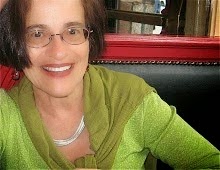
Posing with Nymeth at the London Ismaili Center

The calligraphy conveys the Quran's opening phrase in Arabic, "Bismillah ir-Rahman ir-Rahim" ("In the name of Allah, the most merciful, the most compassionate"). Muslims recite it on beginning a task to receive the Creator’s strength and blessing, among other reasons. The phrase faces the entrance to this religious, social, and cultural meeting place for the Shia Ismaili Muslim community in the United Kingdom. Nymeth Ali guided me through the center, pointing out examples of the relationship between the architecture and design details and the traditions, symbols, history and values of her faith community. For example, the building exterior materials and colors are compatible with surrounding buildings while the interior features traditional Islamic colors — whites, light grays, and blues.

In our rapid-fire give-and-take Q&A, my new friend helped me understand more of Islam and its ethics, and of Muslim peoples and their values, among them humility, charity, and hospitality. And, I endeavored to answer her wide-ranging questions on aspects of Judaism and Jewish people. Together, we traveled the globe across centuries till and including our own lives, roots, passages, and journeys. Thank you, Ryan Makhani, for the introduction! You hinted, “I have a feeling you both will have some incredible conversations.” You did not exaggerate!

September 01, 2016

London Tate Britain: Sketching Mr. Turner

It was Valerie's idea to sketch a J.M.W. Turner masterpiece

Tate Britain’s Clore Gallery houses the world’s largest collection of works by J.M.W. Turner (1775–1851), the master landscape and seascape painter of light. On my visit to the Gallery, I came upon Valerie. Unselfconscious and focused, the nine -year-old was studying a single Turner creation, pausing intermittently to paint, scrawl, and scribble using colored pencils to render her own.

Visitors engage with Turner's masterpieces

While Turner, at the end of his life, became increasingly eccentric and isolated, he never stopped loving children. How delightful to meet Miss Valerie sketching one of Mr. Turner’s masterpieces.

The finished sketch

J.M.W. Turner will become the first artist to appear on a British banknote following a nationwide vote to chose a deceased cultural figure to be the face of the new £20 note. The note will feature Turner’s 1799 self-portrait and The Fighting Temeraire, his tribute to the ship that played a key role in Nelson’s victory at the battle of Trafalgar in 1805.

August 30, 2016

In London: The Threepenny Opera at the National Theater

Selfie with Kidane Isaac Tikue and
a Threepenny Opera poster

“This is an opera for a city that has gone beyond morality. A cheap opera. A threepenny opera.”

With these spoken lines, opens London's National Theater production of Bertolt Brecht's and Kurt Weill's dark masterpiece (1928), "The Threepenny Opera" (TPO), a play with songs about the devastating consequences of naked self interest, bourgeois decadence, rampant corruption, and the pernicious effects of poverty. The German duo's adaption of John Gay’s 18th century "Beggar’s Opera" hasn’t dated at all. Sadly.

I was thrilled to sit beside Kidane Isaac Tikue at his maiden experience of the great tunes and wordy lyrics, mini-dramas in their own right. We dissected the work over lousy cappuccino in the Theater cafe and later at Whole Foods (amazing cappuccino!).

Outside the theater at Southbank Centre — sunny, cheerful, people, pets, food, art, and Modified Social Benches.


On the ground, a plaque about Festival of Love 2016
 and the Danish artist's winning entry 

On this Modified Social Bench, a boy climbs
while a woman sits reading a book

London: Burqa and bra strap tranquility

Hyde Park Serpentine Lake
A Muslim woman wearing a burqa and a Jewish woman whose bra strap is showing. Easy, chill, gracious London.

August 28, 2016

London: Holland Park Kyoto Garden

Kidane, me, Zeeko

This formerly private playground estate now for the 99% features a stunning Japanese garden with a waterfall and koi fish pond encircled by leaping squirrels, strutting peacocks, Pokemon addicts, and a rule-breaking peacock feeder. Zeeko (in the photo, right) approached the offender and spoke gently while pointing to signs: Please do not feed the animals.

While Zeeko is staff, he did not press the non-stopping offender, and I soon understood the reason. I asked why the shabby peacock feathers (mating season ended) and whether the eggs hatched (no, local wolves dine on them). And then, not recognizing his accent, from where did he immigrate. A few sentences, a brief Q&A, a lifted shirtsleeve and pant leg exposing a scarred leg and arm. Suddenly, Zeeko's first-person testimony and physical evidence supplanted grotesque reports and images of civil war, torture, and dismemberment in Sierra Leone.

When Zeeko recently visited his homeland, he met the madman whose machete dug into his arm; and, about to sever it, was suddenly called away. When the madman asked forgiveness, Zeeko replied, I have left behind the past and what you did. But the ones you killed, how will you ask their forgiveness?

August 23, 2016

Tel Aviv to London: דרך השלום | The path of peace

Flight seat neighbors

After decades' traveling, going from Tel Aviv to London was the first time I sat next to one of my heroes, a rock star for peace. Shared geography, histories, and values led to our first meeting in 2002, when I was living in Jerusalem. Ibrahim Abu El-Hawa was born on the Mount of Olives where my father is buried in the Jewish cemetery.

On this flight, the renowned Sufi Muslim known as the "ambassador of goodwill" was accompanying his grandson Akhmed to New Orleans; there, the teen will live with his uncle's family several months learning English and life beyond his native East Jerusalem. Ibrahim and I yakked nonstop and howled laughing (fully understanding) when first-time international traveler Akhmed frequently asked, "Are we there yet?"

A fresh 'do for adventures in New Orleans.
"Are we there yet?" 

Ibrahim showed me the papers he carries, including a laissez passer travel document (no passport yet for him and fellow East Jerusalem residents), copies of articles in the Hebrew, English, and Arabic press on his work, travels, and close relationships, including with the late Ravi Shankar and (Orthodox settler) Rabbi Menakhem Froman.

"דרך השלום" [Hebrew, The path of peace]

Ibrahim has logged millions of miles carrying his message that peace is possible among neighbors, whoever they are, wherever they live. Next stop: China.

June 28, 2016

In Tel Aviv: International evening beach picnic

Le dejeuner sur la sable

At the Mediterranean Sea, near Tel Aviv's Carmel Market, we gathered to cool off in the oppressive heat and humidity and to lift our glasses, forks, and voices to celebrate friendship and discoveries.

We: Two American-Israelis, one Israeli, one Canadian living in Portugal, and one Portuguese. 


Photographer: A New Zealand Maori living in Sweden and attending a local friend's wedding. 


Menu: Merlot wine followed by focaccia breads, pastas, salads, watermelon, and white chocolate.


What's up with the footwear? I dislike wet and sandy toes and delight in wearing my GORE-TEX® boots not only in puddles, the rain, and snow but on the beach, too.

Related posts

May 30, 2016

Memorial Day: Do we find the cost of freedom / Buried in the ground?

Gathering poppies in central Israel (2009)
I first published this post on Memorial Day in the USA in 2009. 

Find the cost of freedom
Buried in the ground.
Mother Earth will swallow you;
Lay your body down.

It's the refrain of an old Crosby, Stills & Nash song by Steven Stills that I first heard in the early 1970s. Today, I was humming it while listening to Bob Edwards interviewing on XM radio several members of the Navy’s Third Medical Battalion, which served alongside the Third Marine Division during the Vietnam War.

For today is Memorial Day when we are called to remember and pay tribute to our service men and women, whether they died on native soil or overseas in German forests or on British coasts, in the jungles of Vietnam or atop the mountains of Afghanistan, or in the sands and urban jungles of Iraq. And while we honor those who sacrificed their lives responding to their country's call to duty, we are also called to address the forces that drive men to war.

Reworking the Crosby, Stills & Nash antiwar anthem
A couple of years ago, in Bountiful, Utah, Scott Wright crafted a video of his photos set to the folk rock supergroup's classic, "Find The Cost Of Freedom." Scott explains, "Their songs carry so much meaning. My thanks to my nephews Ben and James for letting me use their photos in this compilation, both of whom are currently active in the US military; and to my Father Warren Wright who served in WWII. I hope you will watch it in the spirit in which it was made of Peace and Love...one day we will get to the place where there is no more war...of this I am certain."

Watch the video (4:32 minutes). The lyrics are below the screen.


Daylight again,
Following me to bed.
I think about a hundred years ago,
How my fathers bled...

I think I see a valley,
covered with bones in blue.
All the brave soldiers
That cannot get older 'been
Askin' after you.

Hear the past a callin',
From Armageddon's side.
When everyone's talkin'
And no one is listenin',
How can we decide?

Do we find the cost of freedom
Buried in the ground?
Mother Earth will swallow you;
Lay your body down.
(Repeat x2)

Lay your body down...
Lay your body down....

Related posts

May 05, 2016

Extermination Categories (poster) in the Museum of the Liberation of Rome

Extermination Categories (poster)

This poster is among documents and artifacts in the Museum of the Liberation of Rome, the former headquarters of the Gestapo terror apparatus during the German occupation of Rome during World War II. The building contained a prison where the Gestapo incarcerated and tortured members of the Italian Resistance, mostly Jews and political opponents (including, Jews). 

The museum displays newspaper reports of anti-Jewish orders and bans; resistance underground manifestos and handbills; photos and biographies of members ambushed and shot in streets, theaters, offices, research laboratories; blood-stained clothing; and torture tools. In some torture cells, prisoners often nearing death etched or drew on the plaster walls messages and graffiti on life and freedom.

On this somber day in Israel, we are marking Holocaust Remembrance and Heroism Day to remember approximately 6 million Jews, among them 1.5 million children who were annihilated during the Holocaust. As we pledge to never forget, remember also 5 million more who perished during this tragic episode in human history, including Gypsies/Roma, Serbs, Polish intelligentsia, resistance fighters from all nations, German opponents of Nazism, homosexuals, Jehovah Witnesses, people with disabilities, habitual criminals, and the "antisocial" — beggars, vagrants, and hawkers.

My related posts

April 22, 2016

In Rome: A children's bookmobile

Read-aloud picture books for enthusiastic lilliputian-size
Italian-speaking or -babbling listeners and their minders

What could possibly top off a visit to MAXXI, Italy’s National Museum of XXI Century Arts, in Rome? As the country’s first institution devoted to contemporary creativity in art and architecture, it’s no wonder that in the museum courtyard, a public space, I came upon a public library bookmobile!


The MAXXI building is a major architectural work designed by Anglo-Iraqi architect Zaha Hadid, and features innovative and spectacular forms.

Related post

March 22, 2016

In South Tel Aviv: Children of foreign workers, asylum seekers and Israelis celebrate Purim

Costumed twins during events marking the Jewish holiday Purim.
Photo credit: Reuters
Happy Purim! These magnificent children join Purim festival joyous traditions — wacky costumes, parades, performances.

Applause and praise for their dedicated teachers at the famed inner-city Bialik-Rogozin School in South Tel Aviv and their Israeli and international friends, tutors, health and legal professionals, hi-tech companies and other businesses and individuals who understand that —

"There is only one man in the world and his name is All Men.
There is only one women in the world and her name is All Women.
There is only one child in the world and the child's name is All Children."

— Carl Sandburg (1878-1967) American poet, writer, editor

My Purim posts

March 19, 2016

Ukuleles for Peace perform in Tel Aviv, Hawaii, elsewhere locally and globally

"We participated in the 2015 Ukulele Festival in Hawaii,"
gushed this trilingual (Arabic, Hebrew, English) performer.

Radiating infectious warmth and joy, young Arab and Jewish Israeli citizens performed with Ukuleles for Peace (UFP) today at the Bereaved Families Forum Peace Tent for street dialogue set up along the Mediterranean Sea where Tel Aviv meets Jaffa. (Forum members are Israelis and Palestinians who lost a family member to the conflict.) 

Scottish singer, songwriter, guitarist, and Rock and Roll Hall of Fame member Donovan, a huge draw during my own teen years, has invited Ukuleles for Peace to warm-up the huge audience this summer for his first appearance here.


With their families and teachers, they picnic, celebrate festivals,
and visit each other's (Jewish and Arab) schools and homes

Making music while building friendships
without any stereotypical prejudice

The goal of Ukuleles for Peace is to bring Jewish and Arab children together to play with ukuleles, kazoos, and other fun instruments. The hope is that one day they and their families will be the force driving the wheels of social change in Israel. — Founder Paul Moore

February 28, 2016

Leibowitz Prize winners 2016: Bassam Aramin and Rami Elhanan and Yaakov Manor

Street dialogue; Peace Tent banner signs
(Arabic, Hebrew):"It Won't End Till WeTalk"
The Leibowitz Prize award ceremony in Tel Aviv last month felt like two minutes and an eternity. The auditorium packed with honoree's families, supporters, and colleagues, and the messages (Hebrew, Arabic) powerful, significant, moving, heartbreaking, and uplifting. An antidote to the negativity and craziness.

The annual Leibowitz Prize, a Yesh Gvul initiative for public activism in the spirit of the political and philosophical teaching of Yeshayahu Leibowitz, was awarded to Yaakov Manor of the Alternative Information Center internationally oriented, progressive, joint Palestinian-Israeli activist organization, and to Bassam Aramin and Rami Elhanan, spokespersons for the Bereaved Families Forum (members are Israelis and Palestinians who lost a family member to the conflict).

Before the ceremony, the Forum organized a street dialogue among Forum members, friends, and guests, and passersby.

Forum members Robi Damelin, Rami, and Bassam

The next generation: sons of Bassam and Rami

Yeshayahu Leibowitz (1903, Riga, Latvia – 1994, Jerusalem) was a religious thinker and biochemist with doctorates in philosophy and medicine who kept up a relentless critique of Israel's policies in the occupied territories and of its political and religious culture. He supported Israeli Army resisters who refused to serve in the territories, and warned that soldiers in the occupied areas risked becoming "Judeo-Nazis."

Yesh Gvul ("there is a limit", "there is a border", or "enough is enough") was founded in 1982 at the outbreak of the Lebanon War by Israeli combat veterans who refused to serve in Lebanon and has expanded its opposition to service in the occupied territories.

Related posts

February 14, 2016

In Tel Aviv: Along the shoreline to Yafo/Jaffa

The Mediterranean Sea peeking between me and Racheli (R)

Sunny Shabbat afternoon walking along the sea from TLV center to Yafo and back. 
  • Dogs chasing Frisbees all up and down the canine beach. 
  • Cats sunning. 
  • Toddler Belle in pink tights and giant grey headband. 
  • A one-man band. 
  • Riders on all kinds of wheels. 
  • Scents of the sea, Nargila (hookah) smoke, and Mangal (barbeque). 
  • Jews, Arabs, Tibetan monks, missionaries, tourists, African refugees, singles, couples, families, sandcastle builders, sunbathers, and fishermen speaking Hebrew, Arabic, English, Russian, French, and languages unidentified. 

My related posts

January 21, 2016

In Tel Aviv: Beit Bialik, home of Israel's National Poet

Selfie with painting of Israel's national poet (r.)
Hayim Nahman Bialik (b. Odessa 1873, d. Vienna 1934) is Israel's national poet. Bialik helped revive the ancient Hebrew language from one reserved for prayer, sacred text study, and scholarship to a robust modern language. I grew up on his poems, songs, and stories for children, and since have been singing his songs and studying his poetry and the classic Sefer Ha-Aggadah — compilations (with Yehoshua Ravnitzky) of thousands of stories and legends scattered through the Talmud and rabbinic literature, from the creation of the world to the world to come. 

On his 60th birthday, in 1933, all the schoolchildren of Tel Aviv were taken to meet him at his home on Bialik Street that has been converted into Beit Bialik, a museum and center for literary events and the Bialik Archive. Last night, Shmuel Avneri, director of the archive and an important Bialik scholar, treated me and two friends to a private tour. 

This selfie cannot hide my shock and awe standing behind Bialik's desk and in front of a painting of the poet (right) and Ravnitzky. Imagine standing behind the desks of USA national poets Walt Whitman, Emily Dickinson, Robert Frost, Carl Sandburg, and Maya Angelou. Or behind the desk of any national poet of any culture you love.

December 22, 2015

December 06, 2015

Hanukkah: first victory for freedom of worship

Hanukkiot at Judith and Jeff Green's home
in Jerusalem's Abu Tor neighborhood. 
Placing Hanukkiot by a window or door fulfills
the commandment to "publicize the miracle."

I first published this post on Hanukkah 2007. Here, I changed only the Hanukkah dates in 2015.

Hanukkah, the eight-day "festival of lights" begins with the lighting of the first candle at sundown on the eve of the 25th day of the Hebrew month of Kislev in the Hebrew calendar, also called the Jewish calendar. Each year, the corresponding day on the Gregorian [civil] calendar changes; in 2015, Hanukkah begins at sundown on Sunday, December 6, and at sundown on Monday, December 14.

No matter how the Hebrew word חֲנֻכָּה is transliterated into English (Hanukkah, Hanukka, Chanukka, Chanukkah, [fill in your own]), no matter the era or place people celebrate it —
What is most inspiring about Hanukkah is that it memorializes the first clear victory in history for freedom of worship, a celebration that, as contemporary rabbis point out, belongs to all religious people.
— From the Desire of the Everlasting Hills by Thomas Cahill

Hanukkah Q&A

What is the difference between a traditional Menorah and a Hanukkah Menorah (Hebrew: Hanukkiah)?
The seven-branched Menorah is a candelabrum of Jewish historical and ritual meaning that appears on ancient coins, gravestones, and synagogue decorations, and is today the seal and emblem of the State of Israel.

The nine-branched Hanukkah Menorah (Hebrew: Hanukkiah) is a candelabrum with eight branches of equal size and height (one for each night of the Hanukkah festival) and a separate (ninth) candleholder for the "Shamash" (Hebrew: attendant). We use the Shamash to light the other eight candles, in observance of the ruling to view the Hanukkah lights, not to use them.

What's the story?
The Hanukkah festival commemorates the (second century BCE) Jewish Maccabees' military victory over the Greek-Syrian army and the rededication of the Second Temple to the worship of God.

Why the lights?
The Temple purification began on the 25th day of the Hebrew month of Kislev in the year 165 BCE. According to the Talmud, the single-days-worth of pure oil found in the Temple miraculously burned eight days, until more pure oil could be brought.

Victory's message?
"Not by might, not by power, but by My spirit." לֹא בְחַיִל, וְלֹא בְכֹחַ--כִּי אִם-בְּרוּחִי (Zachariah 4:6, whom we read this Shabbat following the Torah portion).

Where is the history recorded?
The First Book of Maccabees tells how, in response to religious persecution and oppression, Judah Maccabee and his four brothers organized a group of resistance fighters who succeeded to drive the far larger Greek-Syrian army out of Judea.

How do we celebrate this fun festival?
Lighting the Hanukkiah is the central observance. Whereas once all lights were oil lamps, using candles is a lot simpler. The first night, a single candle (or oil-dipped wick) is lit, with an additional one lit each successive night.

While lighting the candles, we recite blessings, chant the ancient Hanerot Hallalu, and play dreidel games. We (over)eat oil-rich foods featuring potato pancakes and Hanukkah donuts called sufganiyot (shown on the right), commemorating the miracle of the oil that burned eight days.

What about gifts?
The custom of giving Hanukkah gelt (money) in the form of gold-foil-wrapped chocolate coins to children once brought pure bliss to me and my older sister and to previous generations. (Shiny pennies, won playing dreidel games, were acceptable, too.) I recall the year we got pink gloves! Mine were angora, marking not only graduation from mittens but equally from practical plain wool! My sister's, on the minus side, were wool, while on the plus side, featured black velvet ribbon threaded through each wristband. Whose was the prettier gift? I still wonder.

Who am I remembering this year as I kindle the Hanukkah lights?
My childhood family: my mother and my father, my maternal grandparents, and my sister. My Israeli family.

And I am remembering children everywhere who desperately need light to shine on them. Children whose spirits are darkened by ignorant adults, unemployed or underemployed parents, poor diets, insufficient shelters, shabby clothing, inadequate health care, disinterested leaders, and misguided politicians. Children whose birthright is light daily, and who require comprehensive support and services steadily.

And I ask myself: What am I doing to help shine the light?

November 14, 2015

Sharm el Sheikh, Egypt; Beirut; Paris (11-15)

Tel Aviv city hall lit up in the colors of the French flag
 during a solidarity vigil, Rabin Square (photo credit:REUTERS)

Mr. Rogers would say what his mother said, "Look for the helpers. You will always find people who are helping." And, Mr. Rogers probably would have added, "You, too, be a helper." Vive la France! Liberté, Equalité, Fraternité!

October 25, 2015

Normal Jews and Arabs refuse to be enemies.

# new photos of the child Ahmad Dawabsheh, however,
the settlers burned his father, mother, and [brother] baby Ali.
(Translated from the Arabic. Photo: Shehab News Agency)

Praise and blessings to this beautiful four-year-old survivor and gratitude to his team of loving family, devoted medical staff, loyal community, and dedicated volunteers — Muslim and Jew, local and worldwide.

The Jewish arsonists in the West Bank Palestinian village of Douma attack last July 31 have not been publically identified nor brought to justice. Nor have their homes been razed as is done to Palestinian terrorists. Exclusively military solutions, boycotts, grandstanding, denial, rockets, stabbings, scare tactics, brainwashing cannot end the obscene terrorism, violence, stabbings, and hate speech everywhere down the generations.  Dialog, listening, vision, courage, and compromise between and among political leaders, clergy, military, and other special interest groups can end the obscene terrorism.

October 10, 2015

Dear Israeli Soldier, Dear Aviah

Note: I first published this post on October 18, 2007.


The cherub face in the photo is yours, Aviah, my beloved cousin and a counter terrorist in the West Bank.

Since 2004, you have served in the IDF (Israel Defense Forces) elite Paratroopers Brigade. You passed arduous physical and mental tests to gain admission into this highly trained unit with a history of carrying out special forces-style missions. You have participated in countless operations, among them Israel's unilateral disengagement plan — also called the Disengagement plan or Gaza Pull-Out plan (2005) and the Second Lebanon War (2006). Most of the time, we haven't known your whereabouts or doings, and this is how it must be.

You have worn ceramic bulletproof vests, helmets, night vision goggles, and camouflage face paint (as shown in this photo you gave me on your return from the Second Lebanon War). You have marched for days bearing 60 kilos (132 pounds) and more of combat gear, canteens, backpacks, and injured comrades. You have endured weeks of fighting, intense hunger, fear, frustration, and physical and emotional exhaustion. And, for the rest of your days, the echoes of conflict and war will accompany you.

While your compulsory military service has been my personal grim reminder that freedom is not free, and that the freedoms I enjoy daily I can never take for granted, you are another kind of hero, too.

When doctors diagnosed Ohad with acute lymphocytic leukemia (ALL), you asked the army for leave to be present 24/7 for your youngest brother. So for one month, you were his constant companion, support, assistant, driver, and advocate during initial therapeutic treatments at Hadassah Medical Center. While jobs kept your parents from a round-the-clock presence for Ohad, you stood in for them and for your siblings who are either full-time students or workers.

Last Thursday, when you were honorably discharged from full-time duty (like all Israeli veteran soldiers, you are a reservist until age 50), I telephoned after Havdalah to speak with a sweet, life-affirming, bright young man. I wanted to congratulate and thank him for protecting his family, community, and nation, and for helping to safeguard the dreams, prayers, and labors of peace-seekers everywhere.

Aviah (in blue) with his parents and brother Daniel
in the Havdalah ceremony marking the end of Shabbat


Dear Aviah, I felt my words inadequate and, humbled by your family's signature calm and unassuming courage, I stammered and talked nonsense. So, I am expressing my gratitude (and sadness) more fully by sharing parts of the comment I left on my friend and fellow American Stephanie's blog last spring, when, deeply affected by the Iraq War, she began, "Dear American Soldier."

And though my comment was in response to Stephanie's post-letter, I was thinking of you, Aviah, and I was raising you up when I wrote —
I often speak with my beloved Israeli cousin, 20-year-old paratrooper Aviah, and I ask him endlessly your question, I wonder how you feel when you hear fellow[s…] criticize […] war and your role in it. . . .

When I spot soldiers in USA uniform at airports . . . I ask questions — name, family, home, dreams, and responses to criticism by fellow citizens (and others) on the war they are fighting. It is easy for me to speak with them because . . . I almost automatically see all nations' soldiers as somebody’s son, husband, father, cousin, friend, classmate, neighbor, or ally.

And I have come to see most soldiers as children serving for many reasons and almost always at the behest of old men. And I always weep inside, often out loud, and like you, feel a lump in my throat and an almost paralyzing sadness.

May we pursue dialog instead of war and teach compassion in place of hatred. Always. All ways.

Update | October 10, 2013  Last summer, Aviah graduated from the Hebrew University, in Jerusalem, with a bachelor's degree in economics and accounting. He is working as a security guard to support his young family while preparing for comprehensive exams to become a certified public accountant. An internship with a prestigious global firm awaits him following successful outcomes. Stay tuned.

Related post 
When a child starts to go bald | כשילד מתחיל להקריח